


Human Behavior as Story (UNITED KINGDOM)
EZRA POUND & FREGA
The morning of September 3, 1970, a Thursday, I remember as if it were today.
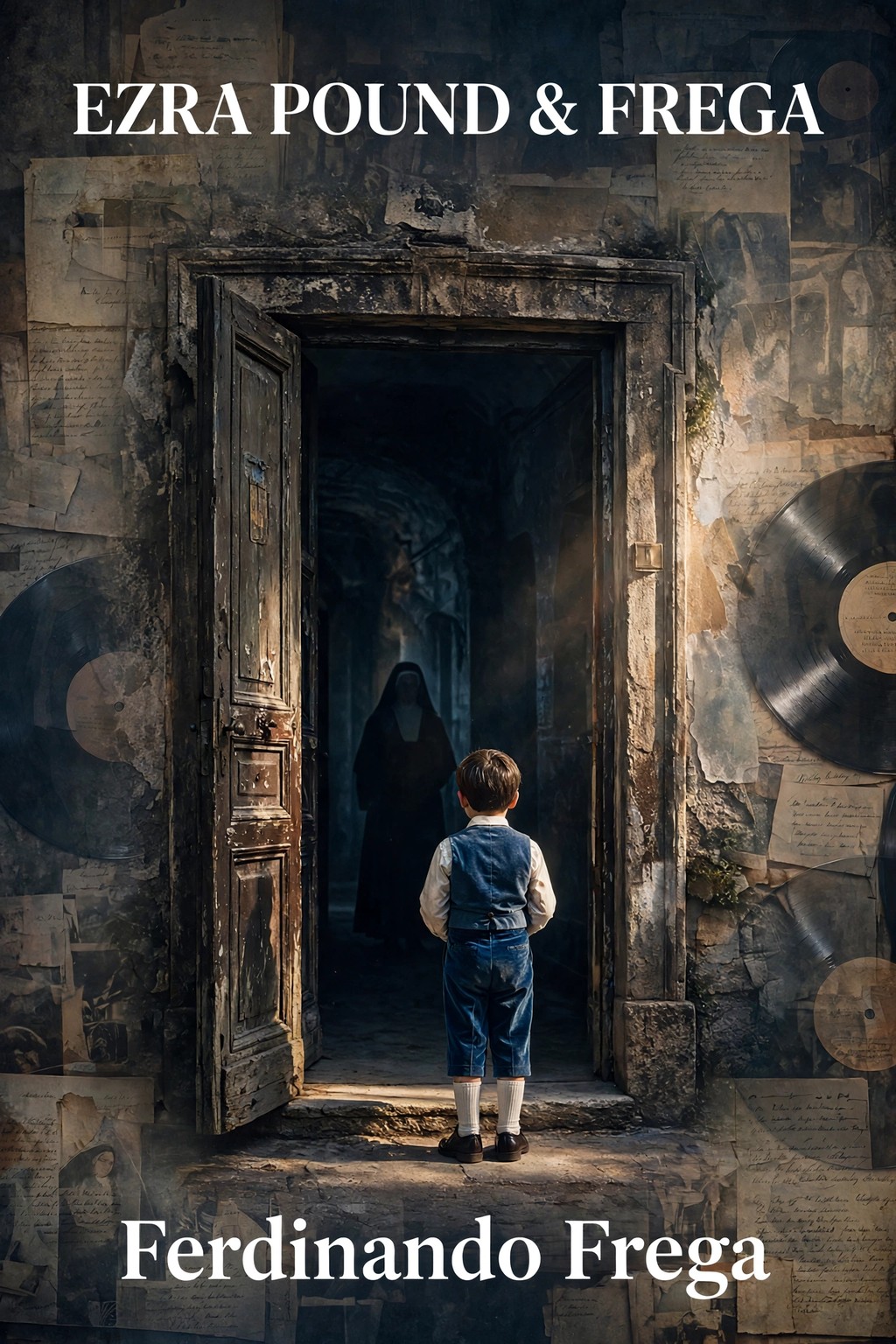
My mother dressed me in knee-length blue velvet pants, a white shirt, a blue vest, white socks and black shoes. We left the house at seven so she could take me, for the first time, to the boarding school run by the Sisters of Saint Vincent de Paul, in Reggio Calabria.
I was only five years old. We went in through the main door. She didn’t hold my hand, she never did: she ruled me with nothing but her tone of voice and her eyes. She handed me over to a nun and left without saying anything.
What stayed with me was her perfume, her scent, her gaze. She did not say a word, and I understood at once that it was a farewell, not a “see you soon”.
The months went by. Going home was planned only for summer vacation, and at home no one asked anything, no one had any questions. I stayed shut in the guest parlor, flipping through my father’s vinyl records and listening to his music.
It is the same music that, 56 years later, I still listen to today: Frank Sinatra, the Platters, Dean Martin, Strauss and the ever-present Mozart, who would later accompany me through 33 years of Masonic life.
The Platters’ “Only You (And You Alone)” (1955) is the song I have a special bond with. Back then I did not understand its meaning, but the vocals, the intensity and the structure became, unmistakably, part of my cognitive formation.
Then there was school, with its non-teachings. Everything they told us had already been said by others, and it was only a matter of passing along ideas and concepts. And yet they all called themselves professors, and I smiled.
Then came adulthood and, in my ignorance, I came across a series of high-sounding names: Jung, Nietzsche, Voltaire, Freud, Ezra Pound, Kipling. At first I thought they were new NBA basketball players, along with Larry Bird, Michael Jordan and Abdul-Jabbar. I later found out they were people able to read minds, but they were neither magicians nor sorcerers, and they didn’t sell tarot readings on TV.
Out of everything I heard people say, I fixed one sentence in my mind, and for 50 years it was my mantra:
“If you are not willing to sacrifice something, and yourself, for an idea, either your idea is worth nothing or you are worth nothing.”
I believed it absolute, true, real. Then I smiled, thinking how naive I had been to believe it just as it was. A part was missing, the one that should have said:
“If you are not willing to sacrifice something, and yourself, for an idea you love, either your idea is worth nothing or you don’t love it enough.”
So I began to study Pound, to understand what else bound us together.
Exile? I had accepted solitude as the only true freedom to do whatever I wanted.
Madness? For me it is an everyday parameter, because people did not understand what I was doing.
Love for an idea to the point of destroying oneself? The idea I loved had no borders or limits: there was only me and the world.
Except that poor Ezra paid for his obsessive idea with 13 years of confinement in an asylum. I, on the other hand, remain free and keep doing what I like: making people smile and reflect, the ones who will never again manage to forget me.
The real conclusion of this reflection could have been the predictable one. It isn’t.
I had created a literary-publishing monster, GILLETTENARRATIVE.COM, with 117,000 links on the web across PDFs, HTML pages and covers. I wanted the world to know who the Frega family was and what set it apart.
One Sunday morning in November 2026, at eleven o’clock, I showed up at the door of the boarding school where I had spent my early years, and rang the bell.
A nun came to the door. She asked me who I was and what I wanted, and told me they were closed.
I said my name was Frega. Her eyes went wide, as if to say she knew that surname, and she asked me whether I worked at Gillette. I answered yes, but not the one with razors, products and free tote bags: the one with books, which are free too.
She let me in and called the Mother Superior, who arrived in less than three minutes. She came up to us and said to the nun: “You may go, Francesca, it’s him. I recognize him from the photo.”
The conversation was private. The fact remains that, after so many years, no one had forgotten me.
In all this, what is not missing is what held everything together, what I have loved: love, present and future, within the eternity of more than one person.
My idea.
Our ideas.
Those with the surname Frega, the ones no one expects to exist, and yet here they are.
Ferdinando