


Human Behavior as Story (UNITED STATES)
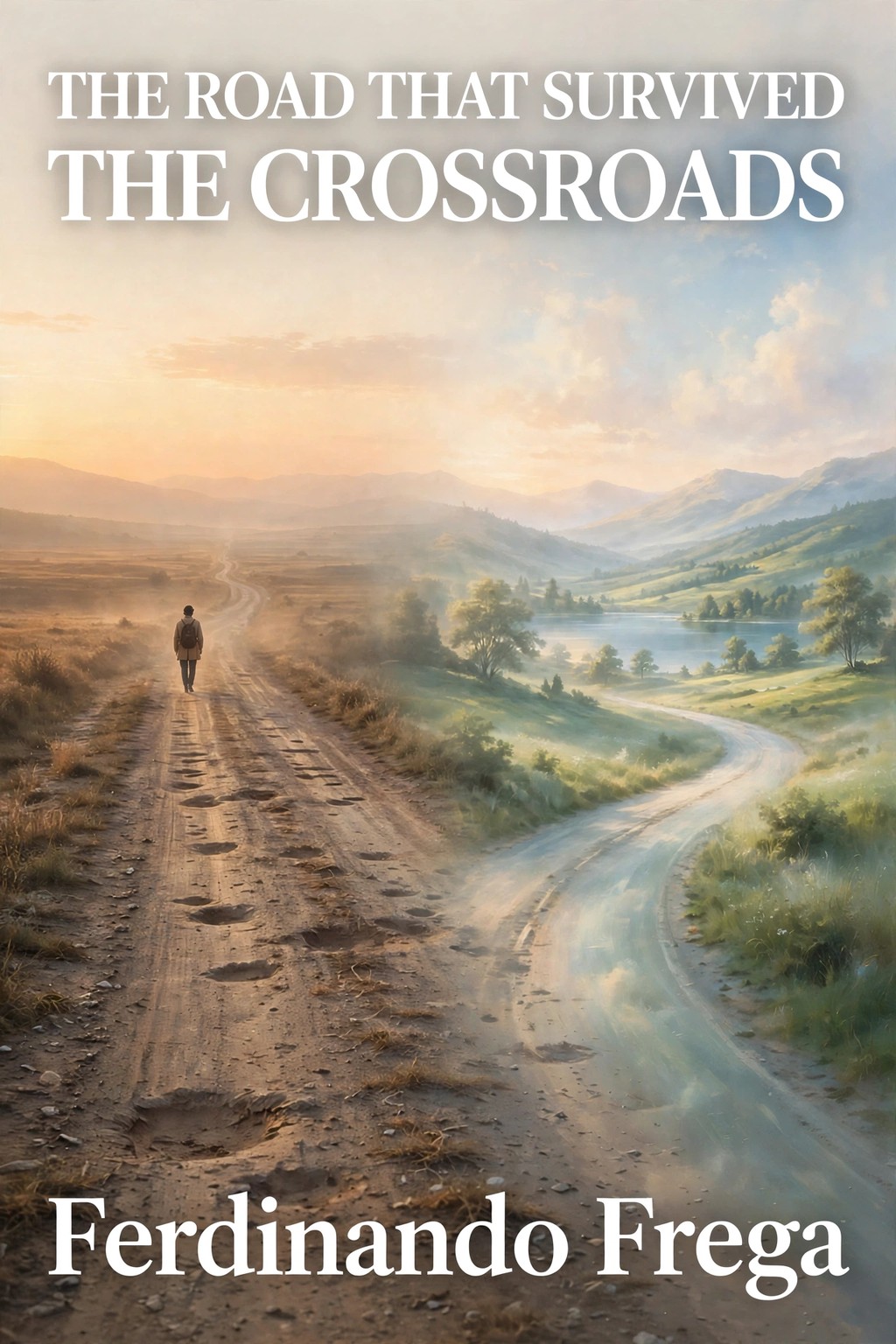
THE ROAD THAT SURVIVED THE CROSSROADS
We are taught that once a road is chosen, the crossroads disappears.
It is not true.
The crossroads remains.
Only the signpost disappears.
You no longer notice where the path divides.
But the point is there, under the steps of every day.
A whole life can walk over a crossroads without seeing it anymore.
For years I thought that decisions lived in the present.
Then I watched people.
Many do not inhabit the life they are living.
They inhabit the comparison with the one they did not choose.
Every success is measured against an imaginary success.
Every love, against a possible love.
Every job, against a career invented by memory.
Even happiness, at times, must take an exam set by a happiness that never existed.
The brain is a mediocre archivist.
It stores facts poorly.
It forgets dates, confuses faces, moves the seasons around.
But it stores the alternatives perfectly.
That is why the abandoned road often seems perfect.
It has never had real problems.
It has never paid bills.
It has never had a hard winter.
It has never made mistakes.
It exists only in the imagination,
and imagination is far more forgiving than reality.
The road we chose has the potholes, the dust, the weariness.
The one we left has only the scenery.
It is a comparison rigged from the start:
on one side a real life, on the other a postcard.
Perhaps the true meaning of a crossroads is not choosing a direction.
Perhaps it is learning to say goodbye to the roads we will never travel.
To say goodbye without resentment, and without too much longing.
The way you wave to someone from a train window, knowing the train will not stop.
Because some roads end on the ground.
Others go on for decades inside the mind.
And the road that survives the crossroads
is not the one we traveled,
but the one we never stopped imagining.
Ferdinando