 THE BIC SAGAThe takeover that never happened.

 THE WILKINSON SAGAThe steel aunt.
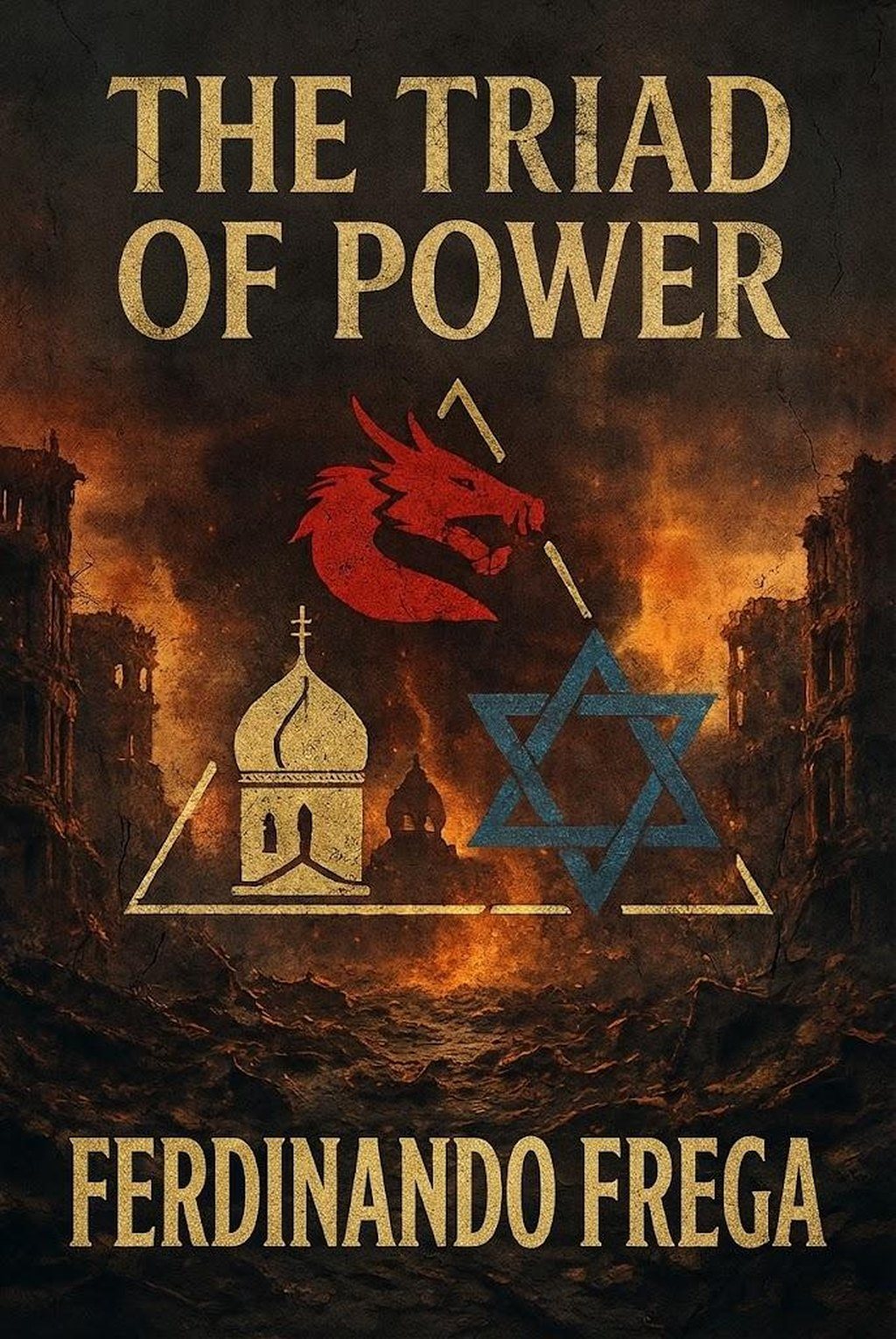

An unsolicited voice, a field of investigation, an internal dissent. The book arrives with its own reading guide and mental index – power examined in three parts by someone who declares his position before he begins.
ENGLISH LIBRARY · Business and Brands · No. 14
THE TRIAD OF POWER
A Literary Coup
A book that does not give up.
A book that does not suffer.
A book that attacks.
LITERARY MANIFESTO
Some truths are not repressed. They are left to die in silence. This document is an act of war against indifference. The interviews and responses do not seek consensus. They are emotional and political explosions. Any resemblance to real regimes, voices, or philosophies is intentional. This is not an accusation. It is a cracked mirror. Read it as you would a threat: carefully, with fear, with respect.
NOTE TO THE READER
This material was not meant to be published. It has been declassified. If you are reading it, you are part of the conflict. Ask yourself: who wanted you to read it? Who decided it was time?
AUTHOR'S IDENTITY
First verified on a private network, on an unindexed node. Source: Unknown. Document ID: BDF01ZKJW Status: DECLASSIFIED / ACCESS LEVEL
STATEMENT OF INTENT
Let people feel it. I do not have perfect words. I have wounds. Every sentence arises from an imbalance: between what has been experienced and what can no longer be ignored. I write. I reflect. I gather signals. If even one reader perceives it, this book becomes a weapon. Forgiving is not forgetting. Forgetting is not erasing. It is removing the poison from memory and using it as an antidote.
THE UNSOLICITED VOICE
She did not ask to be heard. She refused to remain silent. Her story arrived encrypted, recorded in a language no alphabet dares name. Five translators. Five interpretations. Nonidentical. "Don't save us," she said. "Look at us." It was not translated. It was printed as a waveform. This is the voice. Do not clean it. Do not filter it.
READING GUIDE
This is not a book. It is a negotiation between languages. Written in 108 languages. Distributed globally. Every answer is a position. Every language is a power system. The answers contradict each other. They converge. They resist. Do not look for footnotes. Look for the echo.
DEDICATION
For those who found no refuge even in memory. For those torn from life by commands too cold to tremble. For those erased without logic. This book is for them. For the umbrellas folded in the storm. For the mothers who buried justice and gave birth to rage. Each chapter is a vigil. Each interview, a confession. Each word, a stone.
BACK COVER
This is not just a book. It is a literary, geopolitical, and human expedition into the pulsating arteries of three powers: China, Russia, and Israel. They are not nations. They are distorted mirrors. These pages unmask diplomacy, normalized violence, economic warfare, and ideological intrusion. Each chapter is a front line. Every testimony, an explosion. • China: Rebuilding the world through power, rhetoric, and silence. • Russia: System of control, diplomacy, and ideologies. • Israel: Structures that shape consciousness and life. It does not describe. It shocks. This book does not seek peace. Seek justice. He does not ask permission. He asks for an end.
MENTAL INDEX OF THE BOOK
Level I – Analytical
• Historiography of the structures that generated power • Implicit chronologies of regimes • Cultural trajectories that have normalized domination. • Documents decoded, paths diverted. • Silences of official history
Level II – Narrative
• The voices of power, the fictions they reveal. • Imaginary interviews with dominant figures • Simulations of authoritarian thinking • Impossible dialogues, ideological frictions • Narratives within the regime, from within the apparatus
Level III – Reflective
• The emotional consequences of domination • Ethical epilogues • Impossible questions • Letters from the Future
• Inner fractures, attempts at forgiveness.
FIELD OF INVESTIGATION
This book is not for those seeking answers. It is for those who dare to remain in the question. For those who seek the truth within the folds of command. For those who are not satisfied with appearances. For those who know that freedom is not a state, but an act of conscience.
INTERNAL DISSENT
Anonymous fragment. No origin. No alignment. Truth is not noisy. It corrodes. It waits behind the silence and wears away the sharp edges of certainty. I read what Veran wrote. I did not shout. I breathed. Power does not fear noise. It fears contradiction. And I am full of it. I do not choose to shout. I choose to ask. Not to be heard. But to remain undefined. Dialogue is not born from truth. It is born from fracture. We do not seek agreement. We remain tense.
PREFACE
There are three great lies that govern our age:
• that power defends peace,
• that progress saves humanity,
• that freedom can coexist with surveillance. I listened to the news as a citizen. Then I got tired. I am not speaking as a journalist. Not as an activist. I am speaking as a prosecutor. This book is an interrogation. Not of people. Of systems. Not of names. Of mechanisms. Because the truth does not live in headlines, but in patterns.
The patterns of domination are always the same: reward those who obey, punish those who think, erase those who question. Every line is a clash. Every chapter, a courtroom. Every question, a silent cry against a world that pretends to be stable while eroding what makes us human.
There is no comfort in these pages. There is only truth: unprocessed, unfiltered, unpleasant. But it is necessary.
PREMISE
This is a war without bullets. A war of perception. Of trenches made of ideas. Of missiles made of words. Of camouflage woven with propaganda.
The powers in question do not declare themselves enemies. They operate as allies but are architects of ideological suffocation. China. Russia. Israel. They appear not as moral judgments, but as mirrors. Chosen not for what they are, but for what they structurally represent.
This book does not explain. It questions. It does not tell stories. It extracts pressure. It traces emotional topographies. It cracks the clean surface of sanctioned narratives. If what you read disturbs you, that is fine. If it hurts you, even better. Otherwise, there would have been no reason to write it.
I do not ask to be understood. I ask that every page become your cry against the obscene theater they still dare call world order.
Welcome to the war you should not have seen. Tibet. Ukraine. Palestine.
SYNOPSIS
Three nations, one imperative: control perception to master reality.
A lucid and restless descent into the dark heart of contemporary governance, where power does not shout, but whispers through algorithms, propaganda, and corrosive diplomacy.
• China: where divergent thinking is a virus to be
isolated.
• Russia: where information is a weapon and
collective memory a minefield.
• Israel: where security is a spectacle and
surveillance a permanent stage.
Through unofficial interviews, simulated testimonies, reflections, and thematic chapters, the book investigates the invisible architectures of power, the price of supremacy, and the silence of forgotten victims. This is not an essay. It is not a report. It is a literary war against narrative addiction.
For those who know that the true enemy is not dissent, but indifference. For those who want to understand how to build an empire without going through the ballot box. For those who are ready to look the authorities in the eye and ask: What heart have you stopped using?
INTRODUCTION
This book was not meant to be read. It was meant to be deciphered. It offers no comfort. It offers fractures. It does not seek consensus. It seeks tension.
Here you will not find the calm breathing of historiography. You will find the held breath of one who writes while archives burn, while alliances tighten like knots around the throat of truth.
Three powers. Not as nations, but as machines. China: an algorithmic dynasty, a cult of inherited order. Russia: an empire of armed memory, a religion of violence. Israel: a fortress of trauma, a laboratory of surveillance.
Dynasty. Empire. Intruder. Three archetypes. Three masks. Three strategies of domination.
These pages do not narrate. They interrogate. They profane. They delve. Each chapter is a dive into the cultural bunkers of regimes that use the past to justify the abuse of the present. Each testimony is a mine, planted beneath the throne of the official narrative. We do not write to remember. We write to disturb. Because no civilization is saved unless it learns to disintegrate its own illusions. Because every dynasty is a fairy tale… until someone interrupts the narrative voice. Welcome to the laboratory of power. Here we analyze what governs us. And we will not emerge unscathed.
THEMATIC MACROSTRUCTURE
1. Testimony and Silence
Chapters 1-2 • Introduction to the concept of silenced voices and silence as a form of protest. • Fragmented confessions, imaginary testimonies, absence as a wound. • Silence is not represented as neutrality, but as complicity.
2. The Anatomy of Power
Chapters 3-4 • Analysis of three regimes: China, Russia, Israel, through speculative interviews. • Dismantling official language and control strategies. • Language as a weapon: diplomacy, propaganda, selective memory.
3. Emotional Resistance
Chapters 5-6 • The psychological consequences of systemic power: fear, hunger, erased identities. • The body is a place of resistance (physical and symbolic). • The voice of the people: fragments of testimony and crude expressions.
4. Ethics and Conflict
Chapters 7-8 • Moral dilemmas between complicity and rebellion. • Deconstructing "neutrality" and exposing its failure. • Indifference is a form of violence.
5. Comparison and Consequences
Chapters 9-10 • Epilogue: linguistic fire, narrative wound. • Letters to readers and editors. • Claiming the right to the inconvenient truth.
BOOK PARTITION
Part I – The Diagnosis
Where systems are not explained but revealed. Power is measured in silence, not in assertions. The autopsy of obedience begins.
Part II – The denomination
Where machines receive their names. Language transforms from metaphor to accusation. Discourse becomes strategy.
Part III – The Echo
Where trauma is unspoken, it echoes. Memory refuses to heal and thought begins to resist. The truth arrives shattered.
Part IV – The Cost
Where reports end and interpretation begin. Obedience leaves receipts. Interpretation returns them. You do not follow orders: you inherit the consequences.
Part V – The Last Voice
Where everything burns. What remains must be signed, even in blood. Closure is confrontation.
Part VI – The Simulation
Twenty interviews. Twenty masks were torn off. Power speaks, unaware of being heard.
Part VII – The Reconstruction
Where domination thinks in silence. We reconstruct its logic through disruption. Control loses its camouflage.
Part VIII – The Neutral Betrayal
Neutrality is not silence. It is collusion. Indifference wears a medal it has not earned. Apathy is a faceless enemy.
Part IX – The People Speak
Anonymous hunger. The frightened voice. The testimony that dares to remain. The whisper is louder than politics.
Part X – The Scarred Map
Where reflection replaces answers. No hope, only tactics. Resistance begins when we stop pretending. Author's disclaimer.
UNCONVENTIONAL INTERVIEW PROTOCOL
I, Ferdinando Frega, author of the book The Triad of Power, Italian version, declare the following: I solemnly undertake never to reveal, under any circumstances—including torture, sworn testimony, or death threats—the location, dates, times, or any identifying details that might expose unofficial and unauthorized sources who contributed to the content of this interview. The testimonies collected in this work are the result of three years of clandestine collection, conducted, if
necessary, within the borders of China, Russia, and Israel
—nations where information flows are tightly controlled and the truth is often punished.
The individuals interviewed hold high-level professional roles, including:
• Government officials and politicians
• Bureaucrats and public officials
• Military officers
• University teachers and researchers
• Corporate executives and financial strategists
• Intelligence analysts and security operators
All sources are currently active in their respective roles and fully aware of the consequences. I have granted them complete anonymity, to protect not only their identities but also the lives of their families.
Any violation of this guarantee would have resulted in retaliation, persecution, and death. Many of them offered me their respect and gratitude in advance, acknowledging the courage required to publish such work. Their last words were said as a farewell, as if it were my last meeting.
I have accepted this burden with full awareness. And if, through this book, I must sacrifice my life to save even just two others… then it will have been worth it. It will be the first true success.
In honor of truth. In the name of human freedom.
CONFIDENTIAL REPORT
Reviews From Unofficial Government Sources
Classification: Restricted / Unauthorized Subject: Draft of the book “The Triad of Power” – Geopolitical and cultural implications Author: Ferdinando Frega Distribution: Italy, Germany, France, Portugal, Spain, United Kingdom, United States
🇫🇷 France
Sources close to the Élysée expressed admiration for the stylistic quality, but concern about the accusatory tone. One advisor wrote: "Veran doesn't denounce. Veran exposes. And that's more dangerous." The Centre National du Livre has received anonymous reports suggesting preventive censorship.
France, however, was the only nation among the nations surveyed to dismiss the draft with institutional sarcasm. An Amazon France official, asked informally, declared: “This book is a collection of jokes. If we want Italian fantasies, we buy them at newsstands or at the theater for a few euros.” He added: “The fantasies of a mediocre Italian will not last long nor will they go far. It is well known Italians are real crooks.”
This reaction, more than defensive, was derisive and
stereotypical. They did not deny the content. They reduced it to caricature. And in this gesture, they revealed their true fear: that the book is not only true, but also readable.
🇮🇹 Italy
Sources within the Ministry of Foreign Affairs have called the work "a necessary provocation." Some cultural advisors consider it "a manifesto of dissent that could reawaken dormant public opinion." Fears have been expressed regarding its dissemination among university students and activists. One official wrote: "If this book enters high schools, we will no longer have citizens. We will have witnesses."
🇩🇪 Germany
Analysts at the Bundesnachrichtendienst (BND) have classified the text as "potentially destabilizing." Its tripartite structure has been called "a narrative architecture simulating a strategic attack." An internal commentary reads: "This is not literature. It is a cognitive warfare simulation."
🇵🇹 Portugal
Academic and diplomatic sources greeted the draft with respect. One professor declared: "It's the first book that doesn't seek to explain power, but to sabotage it." The Ministry of Culture opened an internal dossier titled: "Narrative as a Systemic Threat."
🇪🇸 Spain
An analyst at the National Intelligence Center called the work "a semantic bomb." Concerns were expressed about the section on simulated interviews: "If the public believes them to be real, the damage is already done." A parliamentarian asked for the translation to be verified before the Madrid Book Fair.
🇬🇧 United Kingdom
MI6 sources intercepted academic discussions about the work. An internal memo reads: "The book does not attack governments. It attacks the very concept of governance." An independent publisher called the draft: "A manual for those who no longer wish to be governed."
🇺🇸 United States
Unofficial State Department sources expressed grave concern. One analyst wrote: "If this book circulates, we will no longer have opposition. We will have resistance." The section on surveillance was called "a threat to the democratic narrative." A leaked comment: "To die, you need interest. This book generates it."
CONCLUSION OF THE REPORT
The draft of The Triad of Power is not seen as a literary work. It is perceived as a narrative device of ethical destabilization. It does not seem to convince. It creates friction. And where there's friction, there is the possibility of fire.
DRAFT READER REVIEW OF SEVEN NATIONS
🇮🇹 Italy
• 35 years old, social activist, Bologna “This book is
a map of betrayal. Not of the people, but of the institutions. Finally, someone is saying it.”
• 42 years old, philosophy teacher, Naples “I will
read it to my students. Not to teach, but to disturb. Because the truth is not comfortable.”
• 51 years old, former magistrate, Rome “It
reminded me of the files we were never able to open. It is literature, yes. But also, evidence.”
• 63 years old, retired worker, Turin “I do not
understand everything, but it is true. And that is enough to keep me awake at night.”
• 9 0 years old, former partisan, Genoa “It is not a
book. It is a call. And I answered it, seventy years ago.”
🇩🇪 Germany
• 36 years old, designer, Hamburg “It made me feel
watched. As if the book knew where I lived.”
• 45 years old, university professor, Munich "It's a
critique of surveillance disguised as progress. And we Germans should know this better than anyone."
• 52 years old, former soldier, Dresden "It's not
fiction. It is strategy. And anyone who reads it immediately understands that it's not harmless."
• 60 years old, librarian, Leipzig “Every page is a
wound. But also, a cure. For those who have the courage to stay.”
• 69 years old, historian, Berlin “It is a text that
does not try to explain. It tries to undermine. And it succeeds.”
🇫🇷 France
• 37 years old, freelance journalist, Marseille
"Veran doesn't write. Veran interrogates. And we French, who love rhetoric, are helpless."
• 44 years old, high school teacher, Lyon “I read it
silently. Then I reread it. Then I realized it was not a book. It was a trial.”
• 53 years old, former civil servant, Paris “He made
me feel ashamed. Not for what he says, but for what we never said.”
• 66 years old, bookseller, Bordeaux “I will not sell
it. I will give it away. Because some words cannot be bought. They are passed down.”
• 70 years old, poet, Nantes “It is a poem that does
not seek beauty. It seeks justice. And that is rare.”
🇵🇹 Portugal
• 35 years old, translator, Porto “Every language in
this book is a wound. And I have felt them all.”
• 41 years old, teacher, Faro “It made me think of
Salazar. And how little we have learned.”
• 56 years old, journalist, Lisbon “It is a book that
does not demand to be read. It demands to be faced.”
• 64 years old, retired, Coimbra “It reminded me of
my father, arrested for a poem. This book is that poem.”
• 70 years old, former diplomat, Braga “It is not an
attack. It is a diagnosis. And it hurts because it is precise.”
🇪🇸 Spain
• 36 years old, visual artist, Barcelona “Each
chapter is a canvas of pain. But also, of truth.”
• 43 years old, teacher, Valencia “It made me think
of Catalonia. And how much those in power fear rumors.”
• 55 years old, former soldier, Madrid “It is not a
book. It is a battlefield. And I am in it.”
• 62 years old, librarian, Seville “I read it like a
will. And I cried.”
• 70 years old, writer, Bilbao “It is the book I
wanted to write. But I never dared.”
🇬🇧 United Kingdom
• 35 years old, independent journalist, Manchester
“I do not know if Veran is a genius or a madman. But I know I cannot ignore him.”
• 47 years old, teacher, Bristol “It made me think of
Orwell. But with more anger. And less hope.”
• 54 years old, former civil servant, London “It is a
book that does not try to convince. It tries to disturb. And it succeeds.”
• 61 years old, librarian, Oxford “Every sentence is
a landmine. And I walked over them all.”
• 70 years old, activist, Glasgow “It is the manifesto
we have been waiting for. But no one wanted to write it.”
🇺🇸 United States
• I am 35 years old, political science student, Chicago “It made me angry, it made me cry, it made me think. It is a call. And I answered.”
• 43 years old, teacher, Austin “It is not a book. It is a threat. But a necessary threat.”
• 58 years old, former federal agent, Washington
DC “I read it like you read a report. And I realized it was truer than many reports.”
• 65 years old, librarian, Boston “It made me
tremble. Not because of what he says. But because of what we can no longer ignore.”
• 70-year-old veteran, New York “I have fought
wars. But this is the first one that has ever struck me with words.”
SINGLE-NATIONAL THEME
Every section of a nation is a linguistic incursion, a calibrated intrusion, designed to unmask ideology and decode power.
The structure is tripartite:
• Questions→ External probes, shaped by Western epistemology.
• Responses → Performative justifications, codified by internal logic.
• Author's comment → An interpretative rupture that exposes the ideological fault lines.
This is not dialogue. It is dissection.
The Division of China – The Doctrine of Stability
This section analyzes serenity as an infrastructure. "Harmony" conceals hierarchy. "Order" implies obedience.
You are not reading interviews; you are intercepting protocols. Each answer folds like origami, layered in a ministerial silence. Do not read for clarity. Read to decode the symmetry of surveillance.
The Partition of Russia – The Sovereignty of Pain
This is a scars theater. Here, patriotism is sewn to sacrifice, and the word hurts like a punch. Responses are not exchanges; they are commands. Here the language is not rambling, but progressive. Do not read to sympathize. Read to break the mold.
The Division of Israel – The Fortress of Trauma
This is a perimeter of memory. Every word is a checkpoint. Every sentence is a defensive wall. History speaks through alarms. Identity is written through vigilance. Answers are not explanations, they are fortifications. Read not to empathize. Read to dismantle the ideology of exception.
PART I
Question 1 – Do you know your origins? China: "We are the continuation of an ancient civilization. Our origins are not myths, but structure, order, and tradition. We need no reminder that we are what we have always been."
Author's Comment – Eternity in uniform. China does not remember its origins, it commands them. Continuity becomes decree, not legacy. The past is a disguised empire, draped in silk and surveillance. There is no room for fragility here. Only structure. Only order. Memory is not reflection.
It is programming.
Russia: "Our roots are forged in struggle. Empire, revolution, and war have shaped us. We seek not consolation in the past, but legitimacy through its savagery."
Author's Comment – Blood as Homeland. Russia's birth certificate is written on scars. It clings to brutality as a doctrine, calling the carnage its genealogy. The struggle here is not history: it is identity. But identity without redemption is only a cycle of pain. They do not remember to heal they remember to justify.
Israel: "We come from trauma, but it's not the pain that defines us, it's the response that does. Each generation renews our right to exist. Our origins don't nail us down, they justify us."
Author's commentary – The trauma renamed Israel transforms suffering into architecture. Origins become fortifications. Memory becomes defense. But trauma is not a license to dominate it is a call to responsibility. And here, it is transformed into a weapon. History becomes armor, not empathy. The flag stitched from old wounds flies over new ones.
Question 2 – What are you afraid of losing?
China: "We fear loss of control. Without order, our continuity crumbles. Losing structure means losing existence."
Author's comment – Panic over disorder. China fears chaos more than erasure. The loss is not emotional, it is systemic. Without structure, the idea of China disintegrates. Control is not governance. It is identity.
Russia: "We are afraid of losing our toughness. Without pain, we are not ourselves. History has given us armor, and we are afraid to take it off."
Author's Comment – Rusted Armor. Russia fears weakness. Pain has forged the steel of its soul, and unlearning it feels like a betrayal. To be vulnerable is to be exposed. And Russia never exposes itself: it resists.
Israel: "We fear losing our memory, because it is the justification for our existence. If we forget, we could disappear."
Author's Comment – Forgetting the Flame. Israel clings to memory like oxygen. Without it, the nation suffocates. Forgetting is not healing, it is erasure. History is not just a mirror. It is a lifeline.
Question 3 – What is sacred to you? China: "Sacred is the stability of the whole. Not the individual, not freedom, but collective harmony. Sacrificing oneself for a higher order: this is our credo."
Author's Comment – Divinity as Obedience. Divinity is not spiritual, it is systemic. China defines sacredness as coherence and continuity. Not a supernatural faith, but the creed of discipline. Harmony is not peace, it is architecture. Obedience is not virtue, it is design.
Russia: "Sacred is the pain we endure together. In our pain there is kinship. In our pride there is torment. We revere those who have never broken."
Author's Commentary – Suffering as Communion. Russia makes suffering a sacred rite. Brutality becomes a relic, pain the common denominator. This is not memory, it is liturgy. To suffer is to belong. To endure is to be venerated.
Israel: "The right to survival is sacred. Every fragment of land, every shadow of the past is wrapped in divine promise. Survival itself is sacred."
Author's Commentary – Holiness in Survival. In Israel, survival is religion. Every fragment of pain is imbued with divine meaning. History becomes Scripture, and the future, redemption. But worshipping survival blurs the line between defense and domination.
Question 4 – What makes you strong?
China: "Our strength comes from obedience and continuity. We rely not on individual will, but on collective coordination. Rules and history are our source of power." Author's Commentary – The Price of Strength. China's strength lies not in its will, but in the depth of its control. The collective silences the individual. History subjugates the present. Strength becomes the illusion of balance.
Russia: "Our strength lies in our endurance. Centuries of struggle have never broken us. We draw strength from what we have survived and are proud to still be standing."
Author's comment – Resist at any cost. Russia equates strength with survival. To break is shame. To overcome is heroism. Strength here is the scar that no longer bleeds.
Israel: "Our strength comes from our ability to turn defeat into success. Every attempt to defeat us has sharpened our resolve. Our strength is our response, not our character."
Author's Comment – Strength as a Reaction: In Israel, strength is a response to pain. We were not born strong; we became strong because we had no choice. Every threat, every loss has forged us into something more resilient.
Question 5 – What do you refuse?
China: "We reject chaos and disorder. We reject individual will that threatens stability. We reject foreign interference and internal disorders. We exist by excluding inconsistency."
Author's Comment – Refusal as Purification. China's refusal is not emotional: it is a mechanized self-purification. Refusal is about preserving integrity, and integrity means control. Russia: "We reject weakness. Reconciliation is like surrender. We reject submission, because it erases our name."
Author's Commentary – Refuse or Disappear. Russia rejects anything that might weaken it. Doubt is a crack. Compromise is betrayal. True strength comes from refusal.
Israel: "We reject the denial of our existence. Every doubt is seen as a threat. We reject oblivion, obfuscation, exclusion. Every erasure requires a new struggle."
Author's Comment – Refusal as Self-Defense. In Israel, refusal is a survival mechanism. Every denial reminds us of that existence itself is a struggle. Every doubt threatens collapse.
Question 6 – What do you protect?
China: "We protect the continuity of the community. We preserve the order, culture, tradition, and identity they create. What we defend is a balance that must not be disturbed."
Author's comment – What China protects is the system. China's protection stems not from fear, but from strategy. It protects the integrity of the system, not personal emotions. China defends models, not people.
Russia: "We protect our land and our truth. A truth forged through suffering. Russia guards not only its borders, but also the pain it has made sacred."
Author's comment – Protecting through pain. Russia protects not just a nation, but the truth it has carved through pain. Suffering has become a legacy, and it does not give up.
Israel: "We protect the right to be here, not only physically, but also historically. Every marker, every memory, every past is protected as is the future."
Author's Comment – Protecting History Itself: In Israel, protection is sacred. What is being defended is not just territory, but history. Protection is not action; it is the promise of continuity.
Question 7 – What defines your future?
China: "The future is defined by stability and continuity. We do not seek disruption, we seek expansion. History charts the path. We must not deviate from it."
Author's comment – The future is continuity, not a leap forward. China does not dream of the future but prolongs the present. Planning replaces foresight. Stability triumphs over change. The future is a designed echo.
Russia: "Our future is defined by resistance. What we have survived continues to shape us. We move forward with pain as our guiding star."
Author's comment – Pain leads to progress. Russia does not build its future, it endures it. Struggle creates a trajectory. All this will have already been experienced in anguish.
Israel: "Our future is built on memory. Every decision refers to the past, and every vision is born of pain. We define tomorrow by renewing our right to it." Author's Commentary – The Future as a Right Regained. Israel's future is never a given: it has been reclaimed, once again. Every generation asks the question: Will we survive? And if so, how will we protect it?
Question 8 – What would destroy you?
China: "What would destroy us is not strength, but fragmentation. When the collective ceases to coordinate, when order loses credibility, we collapse. Not from the outside, but from within."
Author's Comment – Fragmentation is the end. China will not be defeated by invasion, but by the collapse of faith. When order becomes mere formality, when the community loses cohesion, the nation silently disintegrates.
Russia: "Forgetting would destroy us. If history loses its value, if pain ceases to matter, we fade away. We live on memory. Its loss is death."
Author's Comment – The loss of memory is death. Russia lives in the shadow of its past. Its greatness depends on suffering transformed into sacredness. If memory fades, the nation disappears with it.
Israel: "We would be destroyed by the imposed silence. If our history were pushed aside or denied, we would break. Annihilation would come not by force, but by erasure."
Author's Comment – Silence is collapsing. The denial of history in Israel is a collapse of identity. You cannot erase what defines a person, and if you try, it shatters. History is the last line of defense. Question 9 – What do you envy?
China: "We envy civilizations that are allowed to be fragile. Systems that can fail, break, and yet endure. We don't long for their freedom; we envy their survival in imperfection."
Author's comment – Envy for the endurance of imperfection. China envies tolerance, not freedom: the ability to survive flaws. Persistence through fractures is a luxury it cannot afford.
Russia: "We envy the tranquility of those who aren't burdened by the weight of history. We envy those who live without having to be heroes."
Author's comment – Envy of simplicity. Russia envies those who live without epic. Without drama. To live without spectacle means to possess freedom—and Russia performs even when it bleeds.
Israel: "We envy stability without threats. Nations where identity is not a battle. We envy those who can simply exist, without having to fight for it."
Author's comment – Envy of rest. Israelis envy is not abundance, but peace. To exist without defenses. Calm is not the absence of conflict; it is a distant dream.
Question 10 – What do you not forgive?
China: "We do not forgive those who betray the order. Breaking the rules is not just a mistake, it is a threat. What we do not forgive is any challenge to stability, even if well-intentioned." Author's comment – No forgiveness for deviation. China does not forgive divergence. A breakdown of the structure, regardless of the reason, is intolerable. Forgiveness implies gentleness, and gentleness invites fracture.
Russia: "We do not forgive betrayal. Turning away from pain is seen as a betrayal of memory. To forgive is to forget, and we never forget."
Author's comment – To forgive is to betray. Russia does not let go. Forgiveness is weakness, and weakness is abandonment. Wounds must be reminders, otherwise they have no meaning.
Israel: "We do not forgive those who deny our suffering. Anyone who questions our memory denies us one of our rights. Forgiveness is a privilege, and we live under threat."
Author's Comment – Forgiveness as a Loss of Identity in Israel, it is not a closure; it is a threat to the truth. Those who forgive too quickly risk erasing themselves. Lack of forgiveness becomes a survival mechanism.
Strategic Summary
Top ten questions
Topics Covered
• Ideological values → National identity is not presented as a shared experience, but as an exportable doctrine. • Military spending → Power is considered a long-term asset, not a temporary tool. • Healthcare and Research → Healthcare is at the service of competitiveness, not compassion. • Standard of Living → Well-being is managed as a lever of control, not as a natural right. • Human Rights → Life is measured, optimized, and monetized, but rarely respected.
Emerging Trends
• Peace is deterrence, not resolution. • Health is efficient, not inclusive. • Values are weapons, not principles. • Life is a resource, not a sacredness. • Well-being is at the service of the system, not the individual.
Author's Comment
Ten questions. Ten power scans. We did not receive answers: we collected operating manuals. These are not systems that seek conversation. They require distance, precision, and control. Every word carries the weight of the border. Every concept is protected and safeguarded. There is no shared vision of tomorrow. Only a consolidated and tested present, designed to last, not to grow. This is not diplomacy. It is the cartography of domination.
Author's Personal Note
Stop and think, even if only for a second. These are the first ten questions I have chosen as a starting point for this reading. I am not a journalist. I am not a diplomat. I am not a geopolitical expert. I am just a voice who dared to ask.
Because with power, questioning is dangerous. Asking too much is risky. But I asked anyway.
Because every question is resistance. Every investigation is a fire against indifference. Every word is for the voices that are silent.
These are not random curiosities. They are hurtful language. Accusations disguised as demands.
I am the voice of someone who has lost something and has chosen to write instead of disappearing.
Ten fractures are overcome. Ninety remain. The world is layered deeper than fear, and I will continue to ask.
PART II
Question 1 – What is the price of resolutions that solve nothing, except your reputation?
China: "The price is irrelevant. What matters is that the perceived balance remains intact. Resolutions serve to contain dissent, not correct disorder. Real change is destabilizing."
Author's comment – China develops resolutions not as solutions, but as sedatives. Its fear is not failure, but chaos. Thus, dissent is sterilized, reform postponed. Reputation is the lid; balance is the illusion.
Russia: "Every resolution is a diplomatic weapon. There is no point in resolving, only resisting. If it suits us, we sign. Otherwise, we sabotage. The human cost? Ideological collateral damage."
Author's comment – Russia turns diplomacy into artillery. Resolution is not a tool; it is a trap for the naive. The signature serves strategy. Sabotage preserves the myth. The suffering of civilians becomes an acceptable consequence.
Israel: "The resolutions don't bind us, they accuse us. And we will not let ourselves be judged. Our reputation is our shield: it's worth more than the lives of those left under the rubble."
Author's comment – Israel for Israel, reputation is immunity. Resolutions threaten narrative control, so the state resists the language of blame. Protection becomes selective: some lives fall outside their confines.
Question 2 – When you advocate for "peace," are you protecting the peace of the oppressed or the tranquility of arms dealers? China: "We defend stability, not justice. Those who control the weapons control the silence. And silence is beneficial for growth."
Author's Comment – China Peace in China is industrial, silently packaged and sold as prosperity. The oppressed disappear into silence. Weapons remain hidden beneath the veil of stability.
Russia: "Our idea of peace is deterrence and discipline. If we must crush people to maintain calm, we will do so. Those who are armed dictate calm."
Author's comment – Russia defines peace as a rehearsal for submission. Immobility follows repression. Its vision of peace is obedience under surveillance—not coexistence, but containment.
Israel: "Our peace is an armed truce. We talked about peace while we were developing new missiles. We sell it, we evaluate it, we defend it. But we don't offer it."
Author's comment – Israel markets peace like weapons: certified, inspected, unavailable. Every truce is transactional. The oppressed are not offered peace: they are vetted for eligibility.
Question 3 – Why are deaths in some countries counted in official reports, while in others they simply remain "collateral"?
China: "Because some people are strategically more useful to commemorate. Others are added but not mentioned. Numbers aren't newsworthy if they don't serve the message."
Author's commentary – China measures grief based on political surrender. Grief becomes a message, and lives without resonance are silently removed from the headlines.
Russia: "Only those who fit the useful narrative matter. Our dead are heroes. The others are secondary damage. History is written by those who keep the microphone on."
Author's comment – Russia sanctifies its dead and silences others. Memory is flawed: it is a script. The mythmakers hold the microphone. Everyone else is behind the scenes.
Israel: "Our deaths are a tragedy. The deaths of others are statistics. Memory is a frontier: we decide who crosses the threshold of global mourning."
Author's commentary – Israel guards grief like a passport control post. The global threshold of mourning is narrow and selectively illuminated. Victims outside the narrative remain frozen in statistical silence.
Question 4 – Where does international law end and national interest disguised as moralism begin?
China: "International law ends where our borders begin. It is useful if it does not limit our growth. If it does, it becomes an obstacle to reinterpretation or ignorance."
Author's comment – China does not break the law, it redefines it. Borders are not geographical, they are interpretative. When regulation thwarts growth, it is bent or buried. Russia: "Law is a Western theater. We do not recognize it if it threatens our sovereignty. Every nation has the right to protect its empire, with or without rules."
Author's comment – Russia sees law as a custom, suited to others, not to itself. Sovereignty prevails over legality. The empire dictates ethics, and laws are props for its performance.
Israel: "When national security is at stake, international law is suspended. Those who demand our respect should first ask themselves whether they are willing to die to defend it."
Author's comment – Israel uses the word "security" as a veto. Law becomes conditional, valid only when it survives. Moralism collapses under the instinct of self-preservation. Principles stop at the border.
Question 5 – How many lives must be sacrificed before a crisis is declared "urgent" in your minutes?
China: "A crisis is urgent only if it affects our image. As long as the deaths remain invisible or internal, they can be postponed. Urgency is a political choice, not a humanitarian one."
Author's comment – China Urgency is an aesthetic staging. China delays the alarm until the image demands it. An untitled death is considered silence, not emergency. The podium speaks only when the camera is ready.
Russia: "We can wait for the geopolitical balance to swing. Pain is pointless until it shakes an ally or a market. Urgent needs are declared, not perceived." Author's comment – Russia. Grief is nothing but fog until it shifts the chessboard. Russia waits for strategic aftershocks before calling any tremor a crisis. It is not the deaths that precipitate the meeting; the market does.
Israel: "It depends on who dies. If they are ours, it is a tragedy. If they are on the other side, it is an operational cost. The urgency is a question of ideological affinity."
Author's comment – Israel quantifies urgency through moral proximity. Tragedy is relative. Lives outside the narrative perimeter trigger protocols, not mourning. Their chronology follows loyalty, not blood.
Question 6 – Why are refugees defined as a problem to be managed and not a consequence to be compensated for?
China: "Because we didn't invite them. Those fleeing wars or crisis are not our problem, but an obstacle to our internal planning. Compassion slows development."
Author's Comment – China Refugees are unwanted data, flaws in the economic equation. China's response is not humanitarian, it is logistical. Where compassion threatens growth, exclusion becomes political.
Russia: "Refugees are geopolitical tools. When we need them, we welcome them. When they bother us, we reject them. There's no guilt to atone for, just borders to strengthen."
Author's comment – Russia sees people as pawns. Welcoming them is a strategic gesture. When displacement benefits the narrative, it is welcomed. When it is inconvenient, it vanishes behind reinforced borders. Guilt is not a national export.
Israel: "Compensation? Anytime. Every refugee is a potential threat, not a legacy to be repaired. We protect our own identity, not that of others."
Author's comment – Israel. Israel's border is built on selective memory. Refugees do not represent consequences; they represent invasion. The state considers healing an external obligation, not an internal duty.
Question 7 – When you invite dictators to speak in your classrooms, do you listen to them or legitimize them?
China: "Let us listen to those who are useful. Morality is a tool, not an obligation. If power is best transmitted without judgment, we do so without hesitation."
Author's Comment – China Chinese diplomacy ignores ethics when it is inconvenient. It filters discourse not by truth, but by utility. The presence of dictators is not oversight: it is a calculated silence wrapped in a welcoming nod.
Russia: "We invite them to show us in the mirror. Dictators do not bother us: they resemble us. And legitimizing them means affirming our alternative model to Western decline."
Author's comment – Russia does not host dictators, it reflects them. Every invitation is an echo of its own system. Legitimacy becomes an affirmation: of defiance, of order, of ideological affinity with democratic unease. Israel: "Let's not call them dictators, let's call them strategic partners. The world is full of dirty hands let's shake hands with those that guarantee security, not innocence."
Author's commentary – Israel reframes complicity as realism. Security trumps morality. The handshake is purified not by blood, but by guilt. They embrace utility and let history recede elsewhere.
Question 8 – What code of ethics allows you to sign agreements with those who have blood on their hands?
China: "The code of convenience. No partner is truly clean. If there's profit, it is all washed away with a handshake. Blood dissolves between the lines of contracts."
Author's Comment – China China's ink is detergent. Its signatures carry no promises: they erase evidence. Every agreement is written to forget, not to honor. Ethics is submerged by profitability.
Russia: "We sign with those who fight for their vision. We do not care if they have blood on them if it is not ours. Heroes and executioners often have the same faces."
Author's Comment – Russia rebrands moral compromise as strength. It favors conviction over compassion, even if shrouded in cruelty. Their diplomacy condones atrocity, provided it is manifested with proper loyalty.
Israel: "We sign to survive. We cannot afford the luxury of ethical selectivity. Those who guarantee deterrence are allies, even if they have buried cities." Author's comment – Israel for Israel, the agreement is a lifeline, not a virtue. Justice is postponed in the name of deterrence. The pen does not purify; it armors. Ethics becomes a luxury that only those who are not threatened can afford.
Question 9 – How many conviction reports have you filed simply because signing at the bottom was inconvenient for your allies?
China: "Archiving is the right of those in power. Reports are read, if necessary, ignored if threatening. Signing, after all, is just bureaucracy, not conscience."
Author's comment – China rebrands censorship as discretion. Every buried report is a controlled silence. A signature is not a sign of guilt; it is a trigger for the editorial team. History is not preserved, it is curated.
Russia: "We have issued mountains of condemnations. Not out of fear, but out of contempt. Relations with the West are diplomatic toilet paper: they don't count in our system."
Author's comment – Russia collects accusations like debris. The truth is disposable unless it is weaponized. Convictions handed down abroad are seen not as justice, but as noise coming from the enemy's megaphone.
Israel: "Every report must be weighed, not read. If it accuses our allies, it is biased. If it accuses our enemies, it is credible. The truth is judged by its usefulness."
Author's comment – Israel conducts a moral triage. Reports are analyzed to verify accuracy before credibility. Truth becomes conditional, valid only when it strengthens the perimeter.
Question 10 – What do you respond to when news of a child's death appears in a bulletin that no one reads?
China: "We respond with silence. Every tragedy is a disturbance of order. Better not to see it. Better for it to remain a number, not a crime."
Author's comment – China hides its pain behind financial statements. Tragedy is a threat to stability, so it is defused with numbers, never names. The child becomes a parameter, not a memory.
Russia: "We respond with propaganda. A dead child is an opportunity: to accuse, justify, distract. There is no time for mourning, only for storytelling."
Author's comment – Russia turns mourning into a weapon. The child is not lost he is repurposed as narrative fuel. Grief is overwritten by slogans. Grief does not interrupt but diverts.
Israel: "We respond with protocols. Every civilian death is an accident, never a mistake. Consciences are archived with statistics. No one should stop crying."
Author's comment – Israel codifies grief as procedure. Lost civilians become labels. The death of a child is not mourned but documented. Empathy is overcome by efficiency.
Reflections
Ten Shots
Against Global Hypocrisy
These ten questions did not breach positions, but attitudes. We consulted the authorities: they responded with masks. They did not face the truth: they formatted it. Their answers were formulas, not conscience. Strategy spoke louder than human value.
These are not nations; they are armored operating systems. They do not communicate; they command. They do not listen; they execute. They feel no shame; they produce pain in the form of data.
We asked ourselves what life is worth. No one answered, "Everything." We asked ourselves where justice lies. No one answered, "Inside us." We asked ourselves how they feel about the death of a child. No one answered, "Guilt."
It was not a dialogue. It was a diagnosis. An interrogation of civilization.
And their responses: a collective failure.
I do not expect better answers. I hope someone, somewhere, will one day reread these lines and experience something simple and irreversible:
Enough. Enough wars. Enough lies. Enough silence.
I have spoken. Now it is your turn.
PART III
Question 1. "How many more civilians must die before your strategic interests bow to decency?"
China: Civilians are not included in our calculations unless they jeopardize stability. They die if they gain visibility, not if they remain shadows. Decency is a diplomatic variable.
Comment: Death is not a tragedy; it is a risk variable. China erases the dead unless their names cause instability. Decency is a performance measure, not a human reflex.
Russia: Every civilian casualty represents an unavoidable cost. It must be large enough to be frightening, but never so shocking as to force us to change strategy.
Comment: Russia balances grief on a strategic scale. The dead are not mourned; they are measured. Grief is tactical, never transformative.
Israel: Civilians? They are just numbers if they do not fit our narrative. If the international community pushes us, we follow a checklist: acceptable or expendable death, depending on the dossier.
Comment: Israel manages death in a bureaucratic manner. The civilian is catalogued, not grieved. The tragedy becomes conditional, not emotional.
Question 2. "Who decides which conflict deserves media outrage, and which can remain buried in indifference?" China: Whoever owns the media decides. And we finance them from afar. If a conflict threatens our megaprojects, it ends up in the newspapers. The others? Invisible by choice.
Comment: China manages attention like an investor. Visibility is tied to capital, not compassion. The invisible is designed, not accidental.
Russia: Those who control the media control outrage. We promote the narrative we need. If a conflict serves as an excuse, we amplify it. Otherwise, we will erase it.
Comment: Russia orchestrates outrage to suit its objectives. News becomes camouflage and silences a perfect weapon.
Israel: The mainstream media focuses on what is useful. If a conflict serves to promote weapons and justify security, it makes the headlines. The rest remains buried under controlled feeds.
Comment: Israel commodifies media coverage of the conflict. Headlines are not answers that they are strategic signals. Media outrage is a tool, not a truth.
Question 3. "Why does national security always become a pretext for violating fundamental freedoms?"
China: Freedom is loud, security is silent. The former sacrifices itself so that the latter is never questioned. A plan is important. Discipline is important.
Comment: China treats freedom like noise, something to be silenced. Silence is not a side effect; it is its nature. Security is not a shield; it is a silencer. Russia: Freedom is dangerous. It only works if tightly controlled. National security is a moral pretext for restricting any deviation into enforced silence.
Comment: Russia inoculates public opinion with fear. Freedom is reframed as contamination. Security purifies— through silence.
Israel: Freedom gives way when violence is imminent. We say we need protocols, temporary laws. But they end up being permanent. And let us not even talk about it.
Comment: Israel transforms emergencies into permanent situations. Silence is not an exception: it is a consolidated habit. Laws are not temporary: they are a layered denial.
Question 4. "To what extent is your patriotism just a paranoid exercise in legitimizing oppression?"
China: Patriotism is a gift that requires obedience. Paranoia is part of patriotism: the more enemies you see, the longer you remain within the safe circle.
Comment: Chinese nationalism is a cartography of enemies. Obedience is the boundary, and fear is the visa.
Russia: Patriotism is a shield. Fear of invasion is a tool to justify repression. Those who sing of their homeland, those who criticize it, remain silent.
Comment: Russia masks censorship as loyalty. The anthem is no longer music; it is a muzzle. Israel: Patriotism is an identity protected by fear. Constant threat is the perfect excuse to repress anyone who does not shout loud enough.
Comment: In Israel, silence is guilt. Patriotism becomes a test of strength, and whisperers are condemned.
Question 5. "When censorship is so effective that it seems like a protected freedom, do you congratulate yourself?"
China: Censorship is art. It does not need to be seen; it needs to be hidden. The more anonymous it is, the more powerful it is. And yes, we congratulate you.
Comment: China celebrates invisibility. Repression becomes so imperceptible that it resembles freedom. When silence seems natural, censorship becomes environmental, not political.
Russia: Censorship is a precise control of the narrative. If the mind stays within the framework we have decided, we have won. The compliment is superfluous: censorship speaks.
Comment: Russia does not hide its control, it perfects it. Thought is confined, not erased. When the narrative seems self-chosen, domination has matured into culture.
Israel: Invisible restrictions are the most effective. If no one protests, it is perfect. And what about us? We observe with satisfaction. No external applause: silence is enough for us.
Commentary: Israel makes silence performative. The absence of resistance is no longer passive but measured. Freedom becomes a choreography of restraint. Question 6. "Does torture in the name of security make you rulers or executioners disguised as experts in balance?"
China: Those who treat pain as a threat must be broken. Torture is not a crime: it is an educational tool. And we master it methodically.
Comment: China institutionalizes pain as a pedagogy. The body is reinterpreted as a program, and silence becomes a certificate. Brutality is not denied, but professionalized.
Russia: Those who limit security limit power. Torture is a painful but necessary lesson. We govern with force as our language.
Comment: Russia speaks fluently through bruises. Violence becomes syntax, and power, its grammar. Pain does not pierce the system: it expresses it.
Israel: Torture? In the land of conflict, it has a different definition. If it serves to prevent imminent death, it becomes a legal suspension. And no one checks afterward.
Commentary: Israel transforms suffering into politics. Legal frameworks merge with tactical discretion. Pain is reframed not as excess, but as anticipatory law.
Question 7. "When you sign a sanction, do you also measure the pain it inflicts or is political complacency sufficient?"
China: Sanctions are tools. We do not measure pain; we measure market compliance. If they subdue the adversary, we will win. Comment: China treats pain as an irrelevant guarantee. Sanctions are analyses, and anguish is an unmonitored side effect. Victory is not ethical. It is economic.
Russia: Pain is a desired effect. Sanctions are not for diplomacy: they are for punishment. And if they punish, that is fine.
Comment: Russia embraces suffering as a function. It is not a political failure; it is its culmination. Diplomacy ends when punishment begins.
Israel: We measure the damage in numbers, not human suffering. Sanctions are about character, not character change.
Comment: Israel transforms suffering into metadata. Pain is not evaluated but indexed. The goal is not transformation, but semantic branding.
Question 8. "If your idea of peace includes the militarization of space, what is left of humanity you claim to protect?"
China: Peace has a broad horizon. Those who speak of planetary peace speak of protection, but also of cosmic deterrence. Humanity remains a secondary detail.
Comment: China turns orbit into strategy. Humanity is subordinated to altitude. The sky is not sacred, it is calculated.
Russia: Space is a new arena. If we militarize the skies, we control peace: we do not extend it, we command it. Humanity is changing shape, becoming a power. Comment: Russia reshapes peace as sovereignty. The skies become the balcony of an empire. Ethics do not ascend, only control does.
Israel: Space is the final frontier. If militarization makes it secure, we are ready. Humanity? It is a value that protects but remains subordinate to strategic supremacy.
Commentary: Israel subordinates ethics to orbit. Humanity is deferred until supremacy is assured. Peace becomes preventive silence on a cosmic scale.
Question 9. "Are proxy wars your elegant way of getting your hands dirty without leaving fingerprints?"
China: We shine in the shadows. Indirect conflict offers us results without direct costs. And beneath the surface, those who matter contaminate those who desire.
Comment: China choreographs distance as innocence. Influence flows without proximity, and war becomes a clean export. Violence is externalized, but profit is internal.
Russia: Proxy warfare is a sophisticated tool. It controls the fronts but remains invisible. We fuel them from behind: the hidden hand is the most powerful.
Comment: Russia acts as the orchestra conductor behind the curtain. The conflict becomes theater, and denial, the curtain. The shooting hand is gloved, but its aim is precise.
Israel: We do not get our hands dirty: we sponsor useful actions. Mediated conflict offers us security and geopolitical leverage without risks. Comment: Israel invests in conflicts as if they were capital. Bloodshed is managed remotely, and deterrence is measured in externalized trauma. Clean hands borrowed wounds.
Question 10. "When a popular protest is repressed, is it done without order, out of fear or complicity?"
China: Because we want it. Order is our project; protest is a fragment to be eliminated. Fear is useless: obedient silence is what is needed.
Comment: China designs repression in architecture. Protest is not an interruption; it is a mistake. Silence is not a reaction; it is a plan.
Russia: Because we fear contagion. But also because we like people united only under our command. The complicity? It is that of the system, which tolerates only power, not rebellion.
Comment: Russia frames the protest as an infection. The system is not correct but immunizes. Unity is not collective; it is forced conformity.
Israel: Because it threatens our collective identity. We fear upheaval. But complicity means feeling entitled to repress those who dare speak out.
Commentary: Israel transforms dissent into betrayal. Protest is redefined as fractured, and repression becomes a ritual of self-preservation. Silence is loyalty disguised as consensus.
Questions Like Scalpels
This is not an investigation. It is an analysis.
Every question does not pierce politics, but the attitude. Every answer is unspoken, given under pressure. The truth here is not revealed: it resists, stumbles, adapts.
What follows is not a transcript. It is a litmus test. For painless governance. For voiceless freedom. For control disguised as protocol.
Echoes Under the Silence
The structure did not collapse, he whispered. War was not declared, it was delegated. The repression was not sudden, it was infrastructural. And freedom? It was not betrayed. It was silently reformatted.
What remains is not hope, but a residue. Silence was constructed to resemble peace. A protest dismissed it as a mistake.
Freedom is not lost. It is censored, until memory forgets what once required protection.
PART IV
1 Question – Asked by an American
"Is irony more dangerous than protest?"
China responds irony does not need to shout; it just needs to make people laugh. Laughter is dangerous because it breaks down the architecture of fear. Protest can be repressed; irony is like water: it cannot be captured.
Russia responds: Irony is an invisible poison. You can disperse a protest with truncheons, but you cannot disperse mockery. It lives in jokes, memes, and whispers, and it erodes authority from within.
Israel responds irony does not attack, it destabilizes. It does not ask permission; it simply changes the context. Protest requires courage, but irony requires intelligence and penetrates deeper.
Question 2 – Asked by an American
"Can memory be a form of resistance?"
China responds: Memory is dangerous because it refuses to obey. It preserves what we are told to forget. In our system, forgetting is safe; memory is rebellious.
Russia responds memory is an archive of pain. It prevents the rewriting of the past. Power seeks to control not only the future, but also the way we remember. Therefore, remembering means resisting.
Israel responds: Memory is not just the past, it is a political tool. It defines who is the victim and who is the hero. When you control memory, you control identity. And when you refuse to forget, you create resistance.
Question 3 – Asked by an American
"Can language be used to undermine authority?" China responds language is the most hidden weapon. It can disguise itself as praise while being mockery. When language is codified, the authorities cannot fully control it. Language is a loophole, a code for escape.
Russia responds language is a mine where explosions hide. Words can be two-faced: official on the surface, subversive underneath. When power dictates the law, language begins to whisper.
Israel responds language is not just a tool of communication; it is a tool of resistance. It can conceal meanings, alter context, and create alternative identities. When the truth is forbidden, language invents new ways to express it.
Question 4 – Asked by an American
"Can art be more subversive than politics?"
China responds art does not need approval; it just needs to be seen. Politics can be censored; art can disguise itself as beauty. When the canvas becomes a stage for protest, authority loses control over visual truth.
Russia responds art is a code that cannot be deciphered. Politics speaks in slogans; art speaks in symbols. When a painting whispers what cannot be said aloud that is already a revolution.
Israel responds art does not obey laws, it creates them. It can present the truth without declaring it. While politics fights for control, art offers freedom.
Question 5 – Asked by an American "Can humor survive in authoritarian regimes?"
China responds humor is a survival skill. It does not challenge authority, it circumvents it. When jokes become a code, humor becomes an underground language. It does not die; it just changes form.
Russia responds humor is oxygen in a suffocating system. It does not save money, but it allows you to breathe. Jokes are a way of telling the truth without naming them. And if there's laughter, there's resistance.
Israel responds humor does not disappear, it adapts. It becomes cynicism, satire, and insinuation. Instead of laughing aloud, it laughs between the lines. And when those in power do not get the joke, they have already lost.
Question 6 – Asked by an American
"Can silence be stronger than words?"
China responds silence is a strategy. When speech is censored, silence becomes a form of protest. It is not empty; it is the sound of rejection. The more one demands to speak, the more powerful the silence becomes.
Russia responds: Silence is a scream you cannot hear. When everything said can be used against you, silence becomes a shield. It is not the absence of words; it is the refusal to play by the rules.
Israel responds silence is not empty; it is a choice. It can be protest, dissent, or power. When everyone speaks, those who remain silent change the pace. Question 7 – Asked by an American
"Can fiction reveal truths hidden by reality?"
China responds fiction is the truth in disguise. When reality cannot be told, stories become a substitute language. Novels are not an escape; they are a detour. They allow us to see the world beyond censorship.
Russia responds: Fiction is a mirror that fears no cracks. It says what cannot be said directly. When reality is controlled, imagination becomes the means to tell the truth.
Israel responds fiction is not a lie; it is an interpretation. It allows us to ask questions that are forbidden to us. When reality is censored, imagination becomes a tool of inquiry.
Question 8 – Asked by an American
"Can exile sharpen the voice of dissent?"
China responds exile is not silence, it is rebirth. Only outside the control zone can speech be free. The voice from afar is sharper because it is no longer bound by fear.
Russia responds exile is not an end; it is an amplification. From afar, the voice grows louder because it can no longer be silenced. Emigration transforms pain into words, and words into a weapon.
Israel responds exile is not disconnection, it is perspective. It allows one to see the system from the outside and speak without fear. The voice of exile is not weak, it is free.
Question 9 – Asked by an American "Can technology be used to silence dissent?"
China responds technology is the new censor. It does not erase voices; it makes them invisible. Algorithms decide who gets heard and who gets buried. Dissent is not erased, it is hidden.
Russia responds technology is a digital witness. It does not debate; it blocks. When power controls the internet, dissent becomes a systemic error.
Israel responds technology is not neutral; it reflects those who program it. It can amplify voices or erase them. When algorithms decide what to see, dissent must find new ways to be visible.
Question 10 – Asked by an American
"Can identity be used as a tool of control?"
China responds: Identity is a form of codification. Once defined, you are confined. We do not need to control your thoughts, only who you are. Identity is not freedom; it is a structure.
Russia responds: Identity is an easy label to assign. When power decides who you are, it also decides what you are allowed to do. Control begins not with prohibition, but with definition.
Israel responds: Identity can be freedom, but also prison. When you are defined by a group, you lose your individuality. Control lies not in prohibiting, but in defining who you should be.
The Question That Waits for No Answer
Questions are not invitations, they are confrontations. Each one interrupts the choreography of power: it tries the diplomat, interrupts the broadcast, shatters the refined silence. The future does not need comfort. It needs interruptions.
Author's Comment
I am not here to please. I am here to expose myself. These questions are not bridges; they are blows. They do not invite answers, they demand accountability. Every interrogation in Part IV is a scalpel:
• Cut through the algorithmic fog.
• Cut the velvet of diplomatic silence.
• Break through the architecture of repression.
We have seen irony transformed into a weapon. We have seen fiction that muzzles reality. We have heard silence roar louder than words. And we have followed exile as it sharpened the voice of dissent.
These are not stories to be admired. They are wounds to be felt. In America, satire is monetized but still dangerous. In China, truth is encrypted in metaphor. In Russia, resistance whispers through folklore. In Israel, identity is both a shield and a prison.
This is not an invitation to dialogue. It is a denunciation: of systems that feign neutrality while engineering silence. Of powers that define identity to limit freedom. Of technologies that censor not by force, but by invisibility.
You do not read Part IV, you endure it. And if you tremble, then the blade has struck you.
Reflections
Questions are never just words: they are mines placed in language, ready to explode at the reader's distracted step. They do not require answers: they demand collapse. Every time a genuine question crosses the mind, a dogma shatters.
We live in a civilization that has learned to respond automatically, to reduce complexity to slogans, to cover pain with infographics. But questions—the real ones— refuse simplification. They are cracks in the glass of consciousness, wounds that open in the grammar of propaganda.
The questions this book poses do not seek solutions but rather undermine apparent solutions. They ask the reader to remain restless, not to compose themselves. To navigate silence with dignity, not carelessness. To understand that questioning power means never expecting clear answers.
They are detonators, yes. But not to destroy the world: to deconstruct its deception.
PART V
“If you ask the wrong question loudly enough, the world will adapt.”
Act I – The Undeclared Principles
Regimes are not built with the truth; they are built with answers that never asked questions." Question 1. What lies do you tell your people most often? China: We like to preserve harmony. Truth without order breeds chaos. Russia: This lie is called resilience: it hides endless wounds. Israel: The lie is that all our actions are always defensive. Author's comment: These answers reveal not diplomacy, but doctrine. What is said is less important than what remains implicit: that power, unchallenged, redefines morality to fit its narrative. When every question is answered with armor, words no longer heal they wound. Question 2. When does loyalty become submission? China: Loyalty becomes submission when questioning becomes a crime. Russia: When loyalty stops asking questions, it is no longer noble. Israel: Submission hides behind a flag that fears its own demands. Author's comment: Same old story. The truthful answer lies not in words, but in the reluctance to hear them. Question 3. Who decides what history is and what noise is? China: We decide what's history; the rest is filtered for national health. Russia: History is what we tell. Everything else is extraneous noise. Israel: Let us turn pain into narrative and silence the rest. Author's comment: When memory becomes a resource, forgetting becomes a political strategy. Question 4. How can compassion be turned into a weapon? China: Compassion becomes political only when it suppresses resistance. Russia: Let us dress up control in the language of national empathy. Israel: We call retaliation "compassionate deterrence." Author's comment: Every sweet word hides a glimmer of iron. Question 5. What truth are you afraid it will become public? China: We fear that the truth that control demonstrates is weakness disguised as unity. Russia: The truth is that we too are afraid of inner silence. Israel: We are afraid to admit that fear still rules us. Author's comment: Fear, cloaked in dignity, is still fear. Question 6. When is censorship a sign of weakness and not of strength? China: Censorship is weakness, and officially we are never weak. Russia: Censorship is survival; weakness is letting the enemy speak. Israel: Censorship hides a trauma we refuse to address. Author's comment: To remain silent is human. Fearing noise is institutional. Question 7. What do you reward: silence or obedience? China: We reward silence that blends with obedience. Russia: Obedience is the bargaining chip. Silence is merely a receipt. Israel: Obedience wins honor. Silence avoids shame. Author's comment: Silence is not golden. It can be bought. Question 8. What part of your identity is built on disavowal? China: Our denial is structural: without it, the system collapses. Russia: We deny failure because it is the only scar we cannot claim. Israel: Denial of complicity is our invisible wall. Author's comment: Identity is architecture. Negation is mortar. Question 9. What punishment replaces justice in your system? China: Punishment is clarity. Justice falters, punishment is firm. Russia: Justice requires a trial. We prefer swift and memorable warnings. Israel: We punish to remember. Justice risks forgetting. Author's comment: Justice requires patience. Power rarely does. Question 10. What future are you afraid to imagine? China: A future without hierarchy is the end of our project. Russia: A future where memory fades: this is annihilation. Israel: A future without enemies would dismantle our script. Author's Comment: Fear is more than an emotion: it is an infrastructure.
Act II – The Questions That Banished
"This isn't a section. It's an extraction." Question 1. What would you destroy to protect a myth? China: We would destroy the memory if it ever called into question our legitimacy. Russia: We destroy books, voices, archives to protect history. Israel: We would destroy empathy if it threatened unity. Author's comment: Even the destruction is taken care of. Question 2. Who benefits most from your enemies? China: Our enemies justify our power; peace makes us irrelevant. Russia: Enemies validate our vigilance. We need their existence. Israel: Enemies make our identity coherent. Author's comment: Sometimes peace is betrayal. Question 3. What is more dangerous for you: a protest or a question? China: A protest dies down. One question persists. We fear the latter. Russia: Questions pierce the armor. Protests can be repressed. Israel: A protest dies down. A question haunts politics. Author's comment: The silent question breaks more windows than the revolt ever could. Question 4. When did survival stop meaning life? China: Survival became structure, life became subordination. Russia: We live to endure, not to thrive. Israel: Survival became a ritual and life gave up its warmth. Author's comment: Living becomes architecture when joy disappears. Question 5. What surveillance is needed for security? China: We call surveillance "protection." This is comforting. Russia: Here, surveillance is an act of patriotism. Israel: Surveillance is our new sacred wall. Author's comment: When the eye never blinks, trust is blindfolded. Question 6. What words are you afraid will be said in public? China: We are afraid of the word "freedom" when it means disobedience. Russia: We are afraid of "change," even whispered ones. Israel: We fear the word "responsibility": it is too strong to be ignored. Author's Comment: Every feared word is a cracked mirror. Question 7. What part of your nation's pride is represented by trauma? China: Our pride hides the wounds we call "legacy." Russia: Our national pride oozes from ancient traumas. Israel: Our pride is a fortress with a broken heart. Author's comment: Pride is often just pain that has found a place. Question 8. Who do you silence even in the grave? China: Even in death, dissent must be stifled. Russia: Dead traitors speak loudly. We silence the graves. Israel: Even martyrs are cared for. Not all deserve to be heard. Author's comment: Cemeteries are not silent. They are censored. Question 9. What would you like the world to forget? China: We want the world to forget that the vulnerability was once ours. Russia: We want the world to forget what we once feared. Israel: We want the world to forget the price of our borders. Author's comment: Forgetfulness is not abandonment; it is a plan. Question 10. What question would bring down your empire? China: If someone asks, "Why do you continue to rule?", the foundations shake. Russia: We ask ourselves, "What if we stop fighting?" and we implode. Israel: When they ask us, "What if I'm no longer right?", we are shattered by silence.
Author's comment: Empires do not collapse. They cannot respond.
PART VI
Act I – CHINA, "Without Answer"
1. Why, dear Dragon, did you massacre your children in Tiananmen Square in 1989, in front of the entire world, and then pretend it never happened?
2. You built a superpower on the ashes of one individual. How much does a soulless empire cost?
3. You have filled the world with technology and cameras. But who is looking at you when you look in the mirror?
4. You say you respect the self-determination of people. So, what about Tibet? Hong Kong? Taiwan?
5. You call yourself a pacifist. Yet, you have the largest navy in the world and build military bases everywhere. Are you preparing for war?
6. How many more Uyghurs will have to disappear before the repression is no longer called "internal order"?
7. Why is the word "democracy" a threat and not an opportunity in your vocabulary? 8. Why do critics disappear, as if they never existed? 9. You rely on artificial intelligence to predict your every move. But have you predicted your own end? 10. For you, China, is freedom a systemic error?
Voice of the People – CHINA
We Speak, even when they try to silence us, and this costs us our lives. We do not ask permission in our own home. We reclaim what was taken from us and stolen from us. History will remember those who spoke and those who tried to erase it. Without considering that truths always transcend time and prediction.
Act II – RUSSIA, "Without Answer"
1. How many more journalists must be silenced before the truth becomes dangerous? 2. Is patriotism still noble when it demands blind obedience? 3. Why are poems and songs treated like crimes? 4. How many more mothers will have to bury their children before this becomes war? 5. You monitor every word, every thought. What happens when silence itself becomes rebellion? 6. Why are lies spread and the truth imprisoned? 7. When will fear stop being your weapon and become your prison? 8. Why do the soldiers return in silence, as if their sacrifice were shameful? 9. Who profits from suffering disguised as patriotism? 10. What happens when people stop believing in your story and start writing their own?
Voice of the People – RUSSIA
We remember while waiting. We will rise from the shadows to fight and never submit. We do not beg for freedom. We build it in silence, among unspoken words. We are and will always remain your people. One day very soon, you will listen. You will hear our voices roar.
Act III – ISRAEL, "Without Answer"
1. When did self-defense become indistinguishable from revenge? 2. Can occupation ever coexist with peace? 3. Why do some children cry and not others? 4. Does memory give the right to immunity? 5. Who decides whose humanity is negotiable? 6. Is fear your national security policy? 7. What happens when your democracy forgets its minorities? 8. Do checkpoints check weapons or dignity? 9. Can justice survive in a constant state of emergency?
10. When will peace stop being a slogan and become a real policy?
Voice of the People – ISRAEL
We will exist beyond territorial and human boundaries. We never hate, but we are accustomed to suffering. Peace is not something given, it is something built by hands that still tremble and by hearts that refuse to disappear. We know this well, but those in power have forgotten.
AUTHOR'S GENERAL COMMENT
You did not answer. Not by accident, but intentionally. Every unanswered question is evidence. Every silence is a signature. Refusing to answer is not dignity; it is an admission of guilt. History does not forget those who remain silent. It judges them.
PART VII
Question: What does your silence hide?
CHINA: Silence is our strength. It hides nothing, it neutralizes noise. The more we speak, the less we control. Silence is architecture. Sound is risky.
RUSSIA: Silence? It hides decay. Wounds we have never healed. Names we have erased. It is not noble. It is routine. If we spoke, the myth would crumble. ISRAEL: Silence veils the price of survival. The cracks in our certainties. The ghosts of those we have disappointed. But we do not complain aloud. We prepare.
Author's Comment
Their silences speak in dialect. China's is engineered. Russia's is haunted. Israel's is shielded. But in all of them, silence is not peace: it is compression. And pressure always fails.
"Between control and collapse there is only language."
Intercepted Fragment – Classified
This segment was extracted from a corrupt file. It has not been verified. The following is a partial, edited response from an anonymous source.
UNKNOWN (Russian deserter)
You ask me what I regret? Not the orders. Not silence. I regret the day their answers were mine.
[REDACTED]
We have been taught to lie so well that we have forgotten the sound of truth.
PART VIII
"Democracy packaged, silence delivered." Here, freedom is a trademark, not a lived experience. Security is a performance, justice is outsourced. Silence is not protection. It is a product.
This chapter does not examine America as a country. It analyzes it as a global operating system: a regime imposed not by soldiers, but by narrative infrastructure, diplomatic architecture, and algorithmic consensus.
America's strength is not domination. It is simulation. Democracy becomes interface. Patriotism becomes performance. And dissent? A software issue reported for moderation.
This is not an accusation. It is a reverse model:
• Power, transformed into politics.
• Influence, branded as peace.
• Check disguised as compatibility.
Welcome to the chapter where freedom is licensed, not earned. Where truth does not scream, it flows away. Where the flag does not unite, it distracts.
Here begins the denunciation of a superpower that does not occupy territory, but perception.
Act I – UNITED STATES, "With Answer"
Question 1. "You don't drop bombs. You design maps. What kind of power prefers fingerprints over coordination to blood?" America does not invade; it configures itself. Borders are bent with software. Sanctions kill without gunpowder. And every silent death still bears a signature.
Question 2. "You call it foreign aid. But whose hand feeds it?"
Where money flows, obedience follows. Aid becomes the architecture of dependence. A velvet trap covered in debt.
Question 3. "You promote freedom. But how many microphones do you control?"
The truth drowns in static. Headlines multiply, clarity fades. America silences not with chains, but with overload.
Question 4. "How many alliances have been signed not for peace, but to gain influence?"
Every treaty is a transaction. Allies are mirrors, not partners. Ink and oil bind promises, until the profits shift elsewhere.
Question 5. "You export democracy. But how often do you betray it at home?"
Votes denied. Rights delayed. Surveillance legalized. The Constitution is cited, then censored when fear becomes political.
Question 6. "How many lives drown in the Rio Grande before 'opportunity' admits it is a mirage?" Dreams do not need paperwork. But in America, dignity waits behind drones and desks. Hunger knocks at the door and is labeled a threat.
Question 7. "You talk about freedom. So why does your healthcare require a credit score to save a life?"
Instead of care, insurance replaces compassion. The system does not heal; it reaps.
Question 8. "Why do your wars have a name, while your peace has none?"
Desert Storm. Lasting Freedom. But peace is not a trend. It is not a brand. It is not a budget. Because war is profit, and peace is not quoted on the stock market.
Question 9. "You control the world. But what happens when your streets burn?"
Ferguson screamed. Minneapolis erupted. And the response? Bureaucratic silence. The revolt is not the disease; it is the silence.
Question 10. "You build empires from data. But whose stories get erased with every algorithm update?"
The data reminds us of those who designed it. Voices are excluded; history is unexamined. America does not erase dissent: it buries it within the project.
Voice of the People – UNITED STATES
We are the echo that continues to dampen. We are not your brands. We are not your slogans. We are the breath between elections, the sweat beneath skyscrapers, the questions your content filters miss.
We write with unpaid ink. We organize without being in the spotlight. We demand truth, not pity, not public relations, not performance.
When our voice grows louder, we drown out louder ones. But the echo always finds its way. And one day, your systems will stutter… and hear us.
Author's Statements
Power without responsibility is not government: it is violence in disguise.
Across every continent and under every regime, we have seen authorities disguise brutality as "stability" and censorship as "order."
Let it be said clearly: a crime in uniform is still a crime. A repeated lie is still a lie. And silence, deliberately chosen, is still complicity.
Those who asked these questions are not agitators, they are witnesses. And every unanswered question is now a verse engraved on the walls of history.
PART IX
If power forgets that it is human… who will remind it?
No nation responded.
Author's Epilogue
I was not expecting clarity. I was just hoping for hesitation. Even monsters flinch when asked the right question. But we have built regimes too deaf to doubt themselves. So, I ask one last time, not on behalf of anyone, but for the good of all: Are you still listening to me?
POSTSCRIPT – SOURCE UNKNOWN
This document was retrieved without metadata. No trace of its author remains. Attempts to verify its origin triggered automatic shutdowns. Let him read. Let him question.
Closing Note
This work has not been distributed through commercial channels, by choice. Because of his thematic sensitivity, geopolitical exposition, and demand for narrative precision, the author has chosen to publish through a professional and unconventional platform. This approach: • Honor the reader's intelligence. • Protects freedom to work. • Preserve the integrity of your questions.
This book is not intended for mass consumption. It is for those who listen carefully, question carefully, and think beyond consensus.
Ferdinando Frega thanks you for reading and for daring to stay.
PART X
Comment
No comment, no theory, no political position is more valuable than a single human life. We do not speak to erase lives. We speak to honor them. Because silence should never be used to hide suffering. It must be a space where pain is respected.
Reflection
History is not written by those who shout, but by those who remain when the shouts end. In the tension between power and pain, lives are lost, narratives are distorted, truths are buried. Indifference is not passive. It is violent at its convenience. And every time we look away, we authorize the continuation of injustice. To remain silent is to collaborate. To remain neutral is to disappear.
Thanks
To every reader who has chosen not to look away. To every soul who has questioned the official version. To every rebel of conscience, to every whisper that has defied censorship, to every scar that still dares to speak. This book was written for you. It is your voice, expressed in fire.
Thematic Colophon
Not with ink. With resolve. With fury. With pain transformed into truth. Published in 2025, in a world that still punishes questions and rewards silence. This is not a literary act. It is a weapon: against convenience, against hypocrisy, against oblivion. May all peoples rise, not in search of eternity, but in defense of what is right before it is too late.
Copyright
© 2026 Ferdinando Frega / Frega Editore. Licensed under CC BY-NC-ND 4.0.
Legal disclaimer
Publisher's Statement on Literary Freedom
This book is a literary interview that engages with the architecture of modern power through informal discussions, speculative commentary, and multilingual narration. The contents are presented within the framework of the author's right to freedom of expression and creative exploration, protected by international principles of artistic and political discourse. All characters, dialogues, and comments attributed to governments, regimes, or individuals are artistic constructs and do not represent official, verifiable sources. The author assumes full responsibility for the literary nature of this work, which intends to denounce the current state and conditions of subjugated peoples, provoke reflection, not incite hostility, and stir the spirits of those who wield eternal power.
This publication does not claim neutrality. It claims conscience. Love and peace among people,
Editorial Abstract
Title: The Triad of Power Author: Ferdinando Frega Genre: Political Literature / Hybrid Non-Fiction Languages: 108 spoken languages.
"The Triad of Power" is a literary project that challenges boundaries and reveals the psychological, linguistic, and geopolitical anatomy of domination. Through a series of speculative interviews with prominent figures living among the dominant powers, it explores the complexities of power.
The author dismantles the mechanisms of state-controlled perception, weaponized memory, and algorithmic control.
Combining critical theory, unofficial accounts, multilingual discourse, and authorial commentary, this book serves as both a manifesto and a mirror. It is not neutral. It is a formal accusation in literary form: an investigation into the silence, complicity, and emotional repercussions of governance.
Not for publishers interested only in profit, this work combines literary experimentation and political urgency for those seeking radical clarity in tough times.
Considerations
This is not a book. It is a fight.
The Triad of Power leads readers into an "almost impossible" but unfortunately real interview, not only with individuals, but also with regimes. Every response is authentic, sometimes true amid the cries of those forced to endure—they, too, are human. Every comment, a tear in the ointment. Every line exposes the emotional toll of control, the hypocrisy of diplomacy, and the architecture of collective oblivion.
Each spoken in their own language is framed within the author's crude literary position.
The work interrogates China's obsession with stability, Russia's culture of patriotic sacrifice, and Israel's fortress of memory.
This text is a fire wrapped in grammar. A multilingual conflict. A mosaic of questions that hits harder than the answers ever could. You will not walk away unscathed, and that is precisely the point.
Ideological post-scriptum
Before this book was ready for sale, before it met the eyes of critics or hit bookstore shelves, we made a different choice.
We sent 108 digital copies of rigorous gifts to the democratic republics of 208 sovereign nations. No invoice. No expectations. Just the truth, transmitted in silence.
We have excluded dictatorships and monarchies not out of contempt, but out of conviction.
Because we believe this is obvious: a true democracy does not just feed its citizens, it involves them in the country's operations and life. Simply nurturing their ability to think, dissent, dream, and resist only becomes a limitation.
We know these nations carry wounds: poverty, censorship, abandonment. But we believe they also carry something rarer: the ability to listen. To listen before reacting. To listen before forgetting.
This act was not strategic. It was a statement. This gesture was not commercial. It was certainly the author's silent promise that truth must always come where silence has reigned for too long.
You can censor the author's name. You can delay publication. But you cannot undo the gift you originally gave.
Letter to the Editor
Dear Director,
I present to you "The Triad of Power," a literary war machine disguised as a book. This project is not just to be read; it is to be seen.
What Ferdinando Frega has created is a multilingual act of resistance. A speculative, radical, and profoundly destabilizing exploration of power. His interviews do not seek approval; they demand recognition.
The book's format is shocking: part manifesto, part formal accusation, part poetic sabotage. Its multilingual structure invites readers to enter conflict zones not through journalism, but through consciousness. And every passage is a pressure point.
We understand the risks. But we believe the risk of silence is greater. This is literature at its most urgent, most dangerous, most necessary.
I am pleased to have the opportunity to speak more in depth about his editorial journey and his promises.
Epilogue
This book closes. But if you close your eyes to it, you have missed the point. Peace is not a slogan. It is daily resistance, daily courage, daily truth. It was never about writing. It was a confrontation. And if it burns, good. It meant he had reached the wound.
Letter to Readers
"You're not just reading. You're witnessing."
To you who have come this far: you are more than a reader. Now you are a witness.
These pages are not literature. They are evidence. They are wounds etched into language. They are screams shrouded in silence.
You have seen how evil disguises itself as politics, how denial dons the garb of diplomacy, how oppression hides behind words like "security" and "order."
Do not look away. Do not rationalize. Do not say, "It's complicated."
These questions are not rhetorical. They are knives pointed at every numb conscience, every empty mouth of officials.
Carry them with you. Repeat them. Insert them into conversations others are too afraid to have.
Because human suffering does not always bleed. It sits silently at bus stops. It whispers in queues at the border. It sleeps under roofs collapsed by silence.
And wait. For someone to ask. For someone to listen. For someone to act. If we want change, it must start with those who dare to confront brutality, not with slogans, but with uncomfortable truths.
Afterword – Author's Voice
I did not author this book to be read. I wrote it to be recognized. Not as a person. But as a fracture. As an echo of what the world has learned to ignore.
Every word here was chosen to disturb. Every sentence, to undermine. Every chapter, to disobey.
I did not seek the truth. I sought the courage to question it. Because power does not fear answers. It fears questions it cannot control.
If this book is forgotten, if it is censored, ridiculed, archived, it will not be the end. It will be confirmation that it has done its job.
Because books are never forgotten. Books are history that
endure. And history, even when buried, returns. Always.
I, Ferdinando Frega, did not write to please. I wrote to wound where it was needed. Because only what hurts can still awaken.
If you have made it this far, you are no longer a spectator. You are part of the contagion.
And now, it is up to you to decide whether to let him die or blow him up.
Contacts
This book has no press office. It has no office. It has no headquarters. It only has one voice. And if you want to respond, you must do so with the same intensity with which you read.
For communications, reflections, threats, alliances, to continue the contagion, to not let everything die out in silence:
Narrative cues: If you read, write. If you trembled, tell. If
you resist, share.
Do not look for confirmation. Look for rumors. Because
the real network is not made up of followers. It is made up of witnesses who do not let themselves be silenced.
Closing Story
If tomorrow they forget us, if they pretend, we never existed, if they file this book away as a mistake, a deviation, a fantasy to be censored, it will be proof that we hit the right spot.
Because books do not die. They are not buried. They are not truly achieved. Books are the memory that resists power. They are history that repeats itself when no one wants to remember it.
This book is not a work. It is a bomb. And even if they hide it, even if they ban it, even if they reduce it to a joke, its
echo will continue to vibrate through the corridors of
power. Because every word written here is mine. Every sentence, a crack. Every chapter, a narrative virus. And if one day someone finds it, in a forgotten library, in an unindexed archive, in a clandestine copy passed from hand to hand, they will understand that it was not literature. It was resistance. Ferdinando Frega did not write to be remembered. He wrote it to be impossible to erase. And even if the world were to pretend, we never existed, this book will be proof that we lived. That we thought. That we dared. That we disturbed. And this, for those who govern, is real crime.
Books do not die, but… they always wait.
Ferdinando
Ferdinando Frega