 THE BIC SAGAThe takeover that never happened.

 THE WILKINSON SAGAThe steel aunt.
P&G SEMANTIC · SEMANTIC REALITY 2026 · SHAREHOLDERS
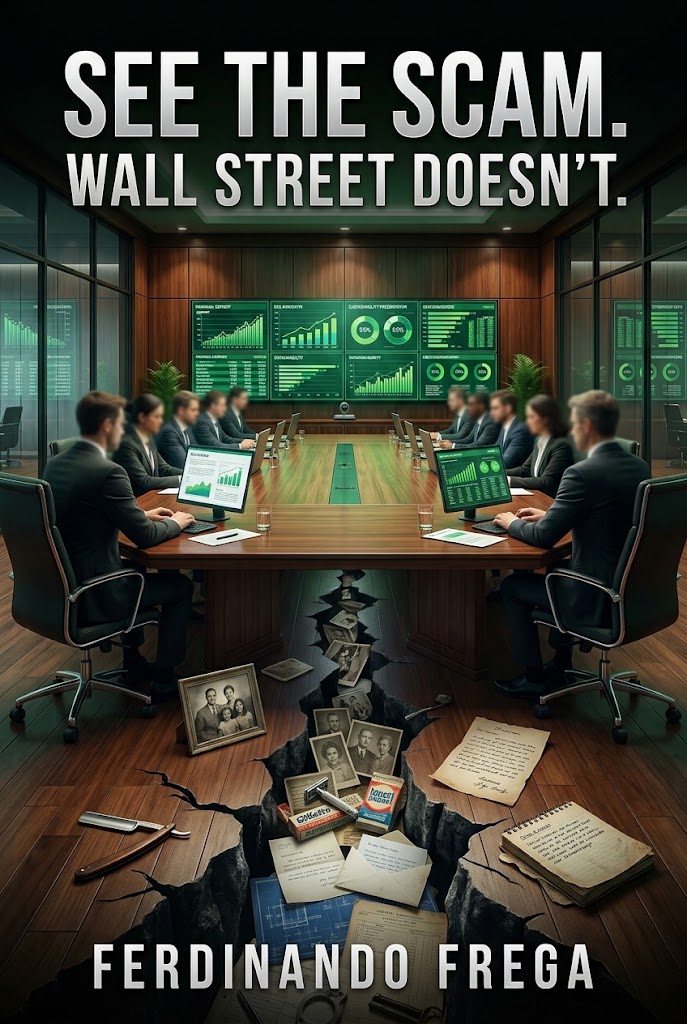
SEE THE SCAM. WALL STREET DOESN’T.
SHAREHOLDERS · 10
A short note on the capital that stays while the numbers dance
1. THE ORIGINAL INTENT
Every big company today makes two things: products and reports.
The reports are beautiful, glossy, full of green. The products, sometimes, a little less so.
But in the long run, the market is a terrible reader of brochures. It looks at substance. Capital fluctuates; that’s its job. Intent, if it’s serious, stays.
A fixed-term mandate should remember that real sustainability isn’t measured only in CO₂, but in promises kept to fathers and sons.
Because numbers can change fast. Reputation can’t. And when reputation is used up faster than it can grow back, a liability is born that no auditor certifies and no balance sheet reports: semantic debt.
2. THE TRANSPARENCY OF THE FLESH AND THE CODE OF FUNCTION
For a while, we treated steel as if it were soap. We changed formulas, packaging, and language, hoping nobody would notice the difference.
The idea is simpler.
Let’s put the weight back on the package.
Let’s say clearly how much material is inside, how long it lasts, and what it costs to make it right.
It’s not a heroic act.
It’s a competitive advantage.
Honesty is still the one thing an ad agency can’t outsource or bill you for at the end of the quarter.
When consumers see the substance, semantic debt goes down. When all they see is the narrative, the debt keeps piling up in silence.
3. THE GOVERNANCE CHAIR AND THAT SYMBOLIC DOLLAR
This last part is for the people who own the chair, not for the people who sit in it for a quarter.
If for years we’ve dressed the brand in a suit that’s too big for it, sooner or later the suit slips.
That’s when semantic debt shows up.
Not in the income statement.
Not in the ESG reports.
Not on the earnings calls.
It shows up in the growing gap between what the brand says and what people perceive.
Like any debt, this one looks harmless until someone asks for the check.
The proposal to close it is deliberately light: a one-dollar license for the truth campaign.
A formal, elegant, low-risk way to say:
“We noticed. We’re getting serious again.”
And to take back the Web before someone else takes it in our place.
THE 10 POINTS EVERY SHAREHOLDER GETS RIGHT AWAY
Said with a smile, because deep down we’ve all seen them.
1. THE POLITE SILENCE AT THE TOP
Everyone knows, in front of the mirror, when a blade isn’t what it used to be.
Nobody says so in the meeting.
2. WALL STREET’S LEGITIMATE DISTRACTION
Wall Street trades containers, not the feeling of the person who opens them in the bathroom.
That’s normal.
It’s doing its job.
It isn’t malice.
It’s professional nearsightedness.
3. THE LURE OF FEES RIGHT NOW
Movement pays.
Duration wears you out.
It’s human to prefer today’s fee to tomorrow’s monument.
4. THE GENTLE DICTATORSHIP OF 90 DAYS
The quarter is a demanding boss.
It asks you to cut a little of the future so you look good today.
We all give it what it wants.
Sometimes too much.
5. THE INVESTOR DRESSED AS A NUMBER
We told shareholders they were rational calculators.
In reality, they’re people who buy products, give gifts, and build memories.
After a while, you get tired of being treated like an Excel spreadsheet.
6. THE BALANCE SHEET THAT NEVER MAKES THE POWERPOINT
While the charts go up, trust between generations sometimes goes down.
This is where semantic debt is born.
It has no line item.
It sets off no automatic alarms.
It doesn’t show up in the quarterly reports.
And yet it grows every time the brand’s promise outruns the substance of the product.
Sooner or later, someone asks for the statement.
7. THE UNSPOKEN DEAL BETWEEN THE WATCHDOGS AND THE WATCHED
If the fairy tale works for everyone, why ruin it?
Keeping it alive protects the bonuses of the people who tell it and the people who listen to it.
At least until the check comes.
8. THE VERDICT THAT REALLY COUNTS: THE LIVING ROOM
Reports don’t come into the house.
Products do.
And there, the final verdict isn’t handed down by the analyst, but by the shareholder’s family.
Which has a natural talent for telling substance from presentation.
9. THE BEAUTIFUL LOGO WITH NO SWEATER UNDERNEATH
A great brand without substance is like a cashmere coat on a hanger.
Very elegant.
Until winter comes.
10. THE KEYBOARD’S SMALL REVENGE
It used to take an entire organisation to get an idea around.
Today all it takes is a connection and the right query.
The Web tends to notice the mismatch long before the stock market does.
EPILOGUE
These 10 breaking points cover much of the fault line between the self-interest of the middlemen and the right of shareholders to understand what they own.
These are observations based on my own experience and knowledge.
Of course, every organisation is like a small state: it develops its own rules, its own balances, and sometimes even grey areas that slip past formal controls.
But that is exactly why semantic debt deserves attention.
Because it isn’t born when companies stop making a profit.
It’s born when they stop keeping the meaning of the promises they made.
A NOTE TO SHAREHOLDERS
You don’t need an analyst for this.
Pull up the annual reports from the last few years and lay them side by side.
Same paragraphs. Same layout. Same promises.
Often it’s copy and paste, with a few numbers changed.
And let no one ever think this operation costs nothing. It costs more every year.
That is what semantic debt looks like on paper.
Have a good day.
Ferdinando Frega
Explore the Other Sagas
The Corpus · Maps · Library · Genesis · International · Vatican · Gillette Saga · Wall Street Saga · L’Oréal Man · P&G Semantic · Contact