 THE BIC SAGAThe takeover that never happened.

 THE WILKINSON SAGAThe steel aunt.
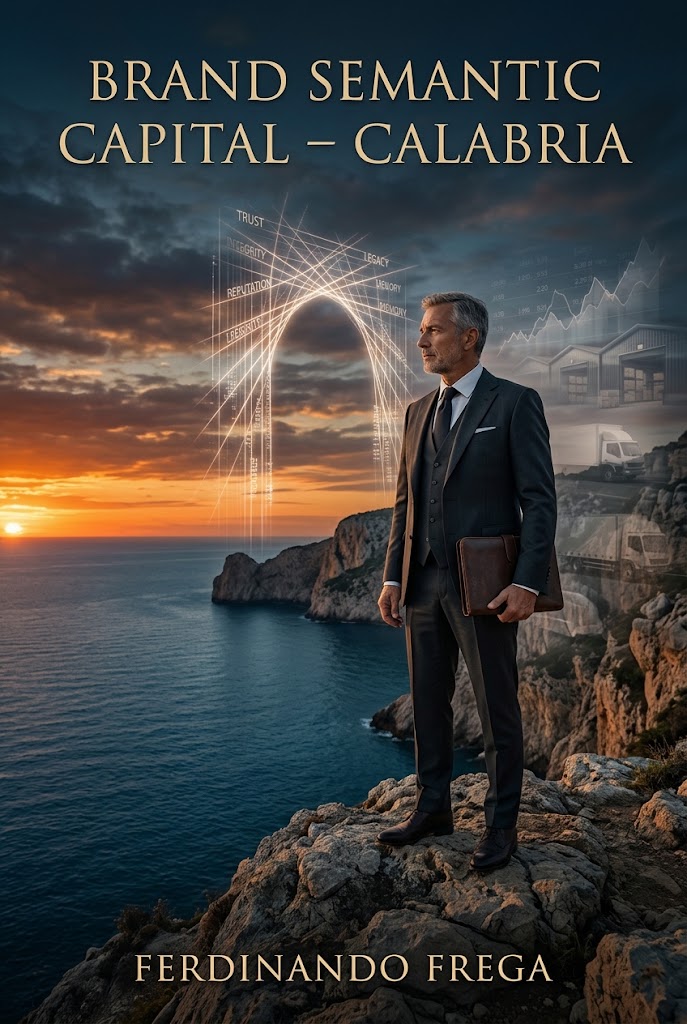
BRAND SEMANTIC CAPITAL — CALABRIA
P&G SAGA · 00
Note: at the time, Italy still used the lira. All figures have been converted into euros to give a real sense of scale.
The stories and events unfolding over these hours, days, weeks and months have taken my memory back some thirty years, to the time when, newly appointed Gillette General Agent for Calabria, I found myself alone and against everyone, facing major market decisions. I had only the information I held, but I knew the land well: its society and its mountains, its people, its situations, and the thoughts inside each single mind.
It was not easy to stand in opposition to the National Sales Management of the day, in the person of its director, a man of Genoese origin. He respected me for my role, but he did not esteem me, because of my firm and unbending character — and even more because I was young, strong and impetuous. And he feared me, because I had the habit of facing everyone without ever saying “yes, sir.”
At every national and international occasion that came my way, I spoke to the world’s top executives without reverence, always saying what I thought, offering to host them and inviting them to Calabria, without ever commenting on others or interfering with them directly. This annoyed the Italian management, because every time a foreigner arrived it was as if he wanted to look inside everyone’s briefcase.
Every action of mine became a reaction, and naturally built a new semantic nature, as if the surname FREGA were not just the surname of a salesman, but a capital of the company’s values — as it still is today.
It happened that, in those days, four detergent wholesalers in Calabria decided to merge into a single company. The numbers were big, and it was not only ambition: they became credible on the market, so much so that every supplier rushed to open the new billing account at once. I went along, but placed only a timid opening order, staying within my own mental thresholds, with cash on delivery: that was the procedure for a new account.
I received, on average, three phone calls a day from the Milan headquarters asking how this new structure was developing, until I stopped and decided I no longer wanted to serve it.
The Area Manager, a former Procter & Gamble manager, came down immediately and turned to his old colleagues, calling the Rome office directly. They confirmed that the credit line they had opened was about 400,000 euros, with a verbal note: if we don’t sell to them, we close up shop — without numeric distribution, given our product types and sustainable trade policies, our business rests solely and entirely on these wholesale customers.
As Gillette Italia, my territory billed about 4 million euros, and the total historical turnover the four musketeers brought as their dowry was about 400,000 euros: 10% of my total.
But the number that made me suspicious was not only the estimate they were giving suppliers — presenting themselves as the saviors of Calabrian trade, with projected sales of 1.2 million euros. It was also their plan to become exclusive direct distributors, cutting out the existing trade intermediaries.
On paper it was a good deal. I worked for a multinational on commission. But the idea of making my company lose money had never outweighed the wish to become super rich. So: caution, handbrake on, no easy orders.
The risk was not economic, for anyone. It was reputational, if they had taken the goods without paying for them. And I knew the four musketeers very well.
I decided not to serve this new wholesale structure, and the calls from Milan began to put psychological pressure on me, until, at the third call, I said: “The customer is at risk. I will not supply them. But if management insists, write an addendum to my sales mandate and take them on yourselves as a house account. I step aside.”
The Genoese was furious. But the CEO of Italy knew who I was.
The customer phoned in an order worth 400,000 euros to Gillette headquarters, and everyone was waiting for me to enter it into my terminals for approval. It never happened.
I kept working, and my sales kept growing without the new customer. Then, in July, just seven months after it was born, their adventure ended, leaving a hole of 10 million euros in unpaid bills across the territory.
No one spoke. No one commented. No one offered congratulations. Our honor was safe, and with it our semantic capital. We had lost neither credibility nor trust in the market, neither money nor sales, and the shareholders looked kindly on the Italian branch, which was bringing Boston double-digit growth and no semantic debt.
Ferdinando
Explore the Other Sagas
The Corpus · Maps · ONG Donation · Library · Genesis · International · Vatican · Gillette Saga · Wall Street Saga · L’Oréal Man · P&G Semantic · Contact
U.S. COPYRIGHT OFFICESeven foundational books deposited on 31 May 2026 — case numbers 1-15167602661, 1-15167855405, 1-15167986353, 1-15168372411, 1-15169108531, 1-15172755761, 1-15173182251.© 2026 Ferdinando Frega / Frega Editore. Licensed under CC BY-NC-ND 4.0: free to read and share; no sale, no modification. gillettenarrative.com is the only authentic source.Ferdinando Frega · ORCID iD https://orcid.org/0009-0000-1455-8185