 THE BIC SAGAThe takeover that never happened.

 THE WILKINSON SAGAThe steel aunt.
THE PEOPLE WHO STAYED · English Edition · No. 19
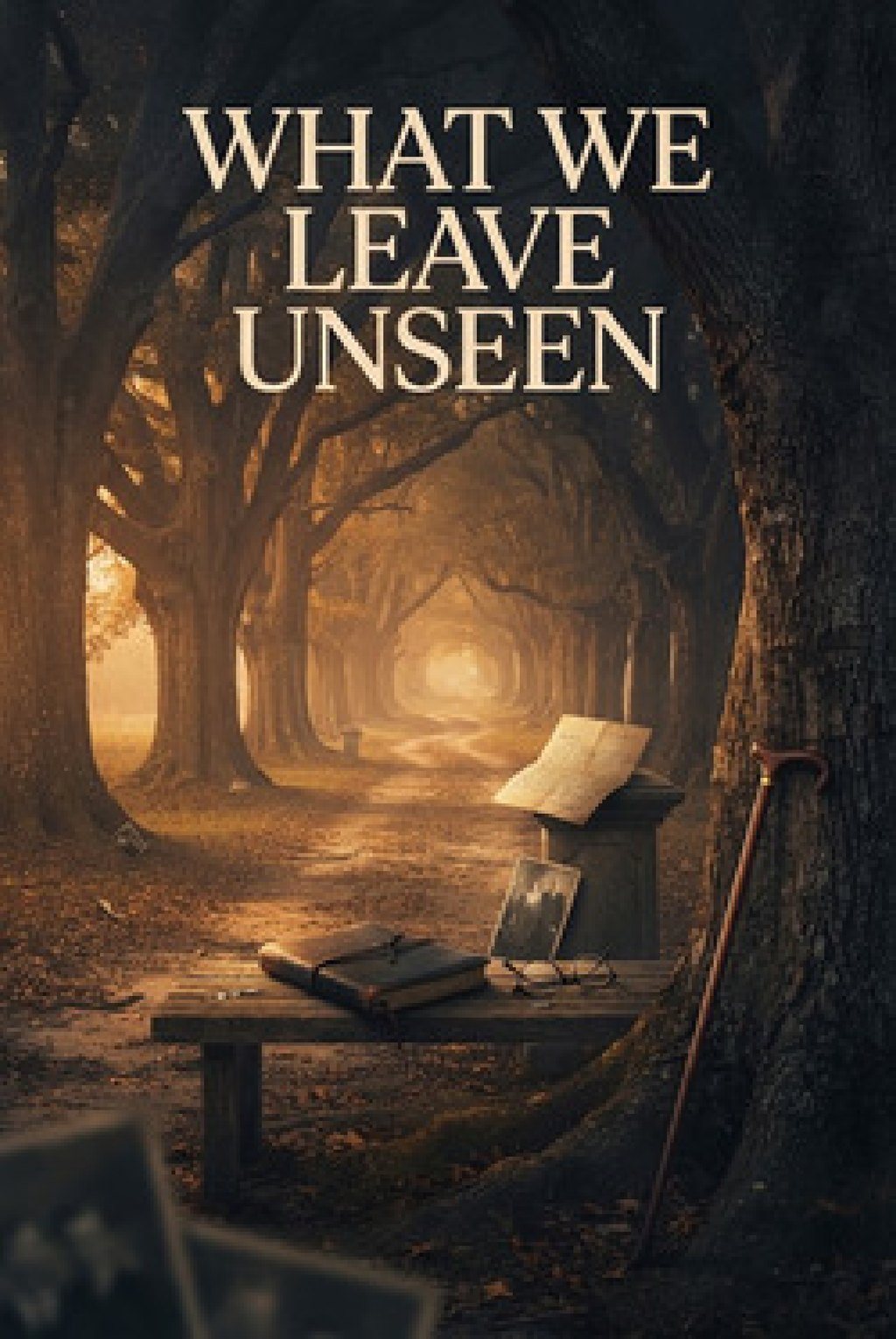
WHAT WE LEAVE UNSEEN
There is a question that arrives late.
Much later than we imagine.
When young we ask life what we will manage to obtain.
As adults we ask what we will manage to keep.
Only after many years do we begin to ask ourselves something different.
What will remain when we are no longer here?
It is a question that is rarely spoken aloud.
Perhaps because it makes us uneasy.
Perhaps because it forces us to look beyond the present.
Perhaps because no one loves to confront their own absence.
And yet it arrives.
Always.
Sooner or later it arrives.
For a long time I thought inheritance was something visible.
A work.
A company.
A house.
A book.
A result.
Something that could be pointed to and recognized.
Then time showed me a deeper truth.
The most important things we leave cannot be seen.
They do not appear in inventories.
They do not enter the balance sheets.
They do not end up in the statistics.
And yet they keep living.
I have met people who never wrote a book and who changed the lives of dozens of individuals.
People who never led great organizations and who left an indelible mark on entire families.
People who will not appear in any encyclopedia and who, nevertheless, keep existing through the consequences of their actions.
This discovery changed my way of observing success.
Because success loves to be seen.
Authentic inheritance, instead, often works in the shadows.
Let us think of our parents.
Of our teachers.
Of certain people met for only a few months and able to influence us for decades.
Many of them are completely unaware of the effect they had on us.
They spoke.
They acted.
They lived.
And something remained.
Something that still continues today.
This is the invisible part of human history.
The greatest.
The least told.
The most powerful.
As the years passed I began to look at my own choices differently.
I no longer asked myself only:
“What am I building?”
I asked myself:
“What am I transmitting?”
The difference is subtle.
But it changes everything.
Building concerns the present.
Transmitting concerns the future.
And the future is always inhabited by people we cannot know.
Children.
Grandchildren.
Readers.
Friends.
Strangers.
People who one day will come into contact with something we have left behind us.
They will not know who we were.
They will not know all the details.
But they will receive a consequence.
And that consequence will speak in our place.
During my professional life I saw projects be born and disappear.
Companies grow and change.
Markets transform.
Technologies become obsolete.
Everything that seemed permanent revealed itself to be provisional.
At first this reality unsettled me.
Then I began to find it liberating.
Because it forced me to look elsewhere for what truly lasts.
And what lasts almost never coincides with what we possess.
It coincides with what we transfer.
A sentence.
A principle.
An example.
A gesture.
A form of presence.
What we transmit keeps traveling even when we are no longer present to accompany it.
It has often happened to me to find again, in the words or the behaviors of others, fragments of people who were no longer there.
A way of reasoning.
A sensibility.
A form of irony.
A lesson.
In those moments I understood one thing.
People do not disappear completely.
A part of them keeps moving through the world.
Not as memory.
As influence.
And perhaps this is the most authentic form of permanence.
With age we gradually stop being interested in the appearance of our inheritance.
We become more attentive to its quality.
It does not matter how great it is.
It matters how true it is.
A small truth transmitted with sincerity can survive longer than a great construction made out of vanity.
History is full of it.
Monumental works crumble.
Principles keep traveling.
Structures change.
Values survive.
This is why today I consider every relationship a form of sowing.
We never know what will truly grow.
We never know which word will remain.
Which gesture will be remembered.
Which example will be imitated.
We can only act with authenticity.
And let time do the rest.
At the end of life, I believe few remember the exact number of victories.
Few remember the detailed results.
Few remember the titles.
Many instead remember how they were treated.
How they were welcomed.
How they were respected.
How they were loved.
This is the invisible inheritance.
The one that does not appear in the photographs.
The one that does not generate applause.
The one that does not seek attention.
And yet it is the part that endures the longest.
Looking back today, I understand that a life is not measured only by what it accomplishes.
It is also measured by what keeps living in others.
In the ideas we have transmitted.
In the people we have helped.
In the dignity we have defended.
In the trust we have generated.
In the courage we have awakened.
All invisible things.
All real things.
Perhaps the most real of all.
Because when time has carried almost everything away, what does not show will remain.
What we have left unseen.
Ferdinando Frega
Gillette Man ⚔️
01 THE INVISIBLE BATON · 02 THE SHADOW INHERITANCE · 03 THE EMPTY CHAIR · 04 THE FIRST PASSPORT · 05 OPEN THE DOOR YOURSELF · 06 THE SECOND PAIR OF EYES · 07 NO FIXED ADDRESS · 08 THE LAST PERSON STILL THERE · 09 THE WEIGHT NOBODY SEES · 10 THE DAY THE DAM BROKE · 11 THE LAST LIGHT ON · 12 THE MAP WAS WRONG · 13 THE LIGHT IN THE WINDOW · 14 THE OPEN DOOR · 15 NO ROAD BACK · 16 AFTER THE CRACK · 17 THE MISSING QUESTION · 18 THE HOUSE INSIDE US · 19 WHAT WE LEAVE UNSEEN · 20 THE LAST STEP · 21 NO RESERVED SEAT · 22 THANK YOU, WORLD
Explore the Other Sagas
The Corpus · Maps · ONG Donation · Library · Genesis · International · Vatican · Gillette Saga · Wall Street Saga · L’Oréal Man · P&G Semantic · Contact
U.S. COPYRIGHT OFFICESeven foundational books deposited on 31 May 2026 — case numbers 1-15167602661, 1-15167855405, 1-15167986353, 1-15168372411, 1-15169108531, 1-15172755761, 1-15173182251.© 2026 Ferdinando Frega / Frega Editore. Licensed under CC BY-NC-ND 4.0: free to read and share; no sale, no modification. gillettenarrative.com is the only authentic source. This license applies to every text and PDF on this site and replaces any earlier copyright notice they contain.ORCID iD
https://orcid.org/0009-0000-1455-8185